Learning Center

Best Work Truck Seat Covers of 2026
Laura Meyer

Best Work Truck Seat Covers of 2026

When we researched top seat covers for work trucks, we didn’t just pick the ones at the top of Google. We asked blue-collar men and women what kinds of covers they’ve tried in their trucks, and this is the list they came up with:

Covercraft Endura PrecisionFit
Covercraft Carhartt SeatSavers
Wet Okole
Marathon
Canvasback
ShearComfort CORDURA®
VERTEX OFF-ROAD
TigerTough

Since we’re comparing covers for work trucks, we used a 2023 Ford F150 regular cab for pricing and research. Let’s get right into highlighting these seat-savers.

Note: Covercraft regularly adjusts its ARV to reflect different sales percentages. The prices we show here are their retail prices at the time of publication.

Covercraft Endura PrecisionFit

Covercraft Endura PrecisionFit seat covers in black
Covercraft Endura PrecisionFit seat covers. Source: Covercraft

It’s nearly impossible to Google truck seat covers without Covercraft popping up. We give them credit. They’ve been in the business for over 50 years and have a great product with a stellar reputation. 

They make seat covers and covers for cars, boats, RVs, airplanes, and patio furniture. First, let's take a look at the Endura PrecisionFit

The fabric for the Endura PrecisionFit is vague. According to the description, it’s a canvas-nylon-polyester blend. But what does that mean? We contacted customer service to learn more, and they didn’t elaborate beyond the product description. It’s tough to know how durable their covers are without knowing more about the fabric. 

Price: $334

Pros

✅ Waterproof

✅ Airbag-safe

✅ Works with heated and cooled seats

✅ Fits factory seats perfectly 

Cons

❌ Fabric is uncertain

❌ Only a limited warranty available

Verdict

This is a great seat cover, and we don’t think you’ll be disappointed. But it’s at the top of the price range for a set of bucket seat covers for a 2023 Ford F150 Regular Cab. If you can get them on sale, they might be a worthwhile investment, but we can’t say for how long without knowing more about their material.

Covercraft Carhartt SeatSavers

Covercraft Carhartt car seat covers
Covercraft Carhartt Seat Savers. Source: Covercraft

Everyone loves Carhartt. We get it. Their reputation is undeniable. They've got that classic look of your grandpa's favorite jacket; overall, we feel nostalgic about them. The brand has been around since 1889 even though Covercraft Carhartt SeatSavers are newer to the market, so let's look at how these cover stand up to some others.

Price: $379

Pros

✅ Great reputation

✅ You know exactly what you're going to get

✅ Air-bag safe

Cons

❌ Limited colors

❌ Not waterproof

❌ They don't stay in place

Not as durable as other seat covers

Verdict

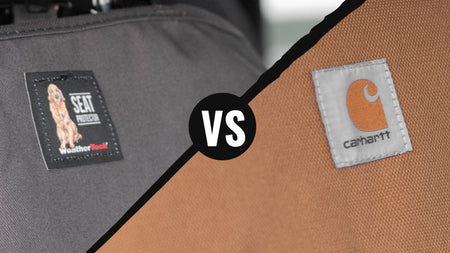
While we have a lot of respect for Carhartt, when it comes to choosing seat covers, we’d actually lean towards Covercraft’s Endura PrecisionFit over the Carhartt SeatSavers. It's not just about the price; the PrecisionFit covers just seem to fit better and provide more value. If you’re into a variety of colors, you might find the two-color options of these covers a bit limiting. And the two-piece design? It tends to slide around on the seat because of how it's fastened. Since these are an expensive choice, we really hoped for a bit more from them.

Read Covercraft Carhartt vs. TigerTough Seat Covers

Wet Okole
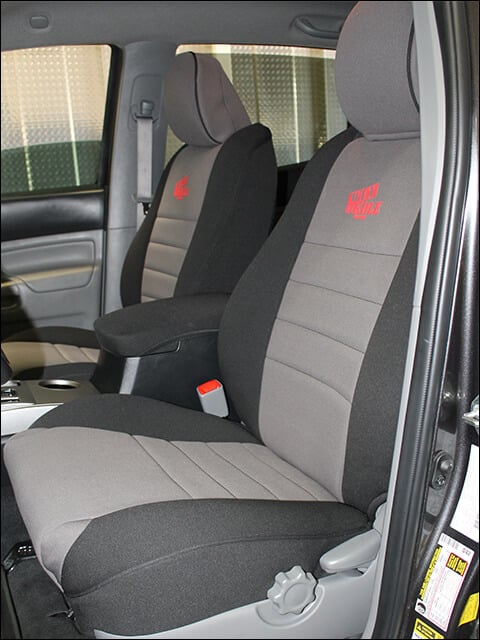
Wet Okole seat covers in gray and black
Wet Okole seat covers. Source: Wet Okole

Okay, we know what you’re thinking…this is about work truck seat covers, and most of us aren’t driving around Baywatch trucks. Yep, this is a wet suit in seat cover form. We didn’t think it would be a fair comparison either, but after hearing from multiple people in the construction industry who love their Wet Okole seat covers, we decided to give these a fair shake.

Since they’re made from wetsuit neoprene and bonded with nylon, they’re waterproof and totally safe on vehicle seats. We'll take a look at their standard seat covers without a console cover.

Brent Fox, a contractor in the Nashville area, can speak to the durability. "I had Wet Okole in the truck I just retired. Rode on them for 12 years and, at some point, sent them back for a refurb. They were a great product and an easy company to work with."

Price: $402

Pros

✅ Easily washable

✅ Self-extinguishing 

✅ Airbag safe

Cons

❌ Only a 90-day warranty

❌ No returns accepted

Verdict

These seat covers really do a solid job of protecting the seats in your work truck, almost like a wetsuit, and you can even clean them with wetsuit shampoo. They’re self-extinguishing, which is a big plus if you ever find yourself dealing with flames inside your truck. Plus, they're designed to be airbag-safe because they don’t cover the side of the seat where the airbag is located. Airbag safety is a must for us.

At first, we were a bit skeptical, but these covers have received great reviews. We really appreciate the custom fit and how easy they are to clean. However, at $374 a pair, they’re not exactly budget-friendly, and the very limited warranty makes us a bit hesitant to give them our full endorsement.

Read Wet Okole vs. TigerTough Seat Covers

Marathon
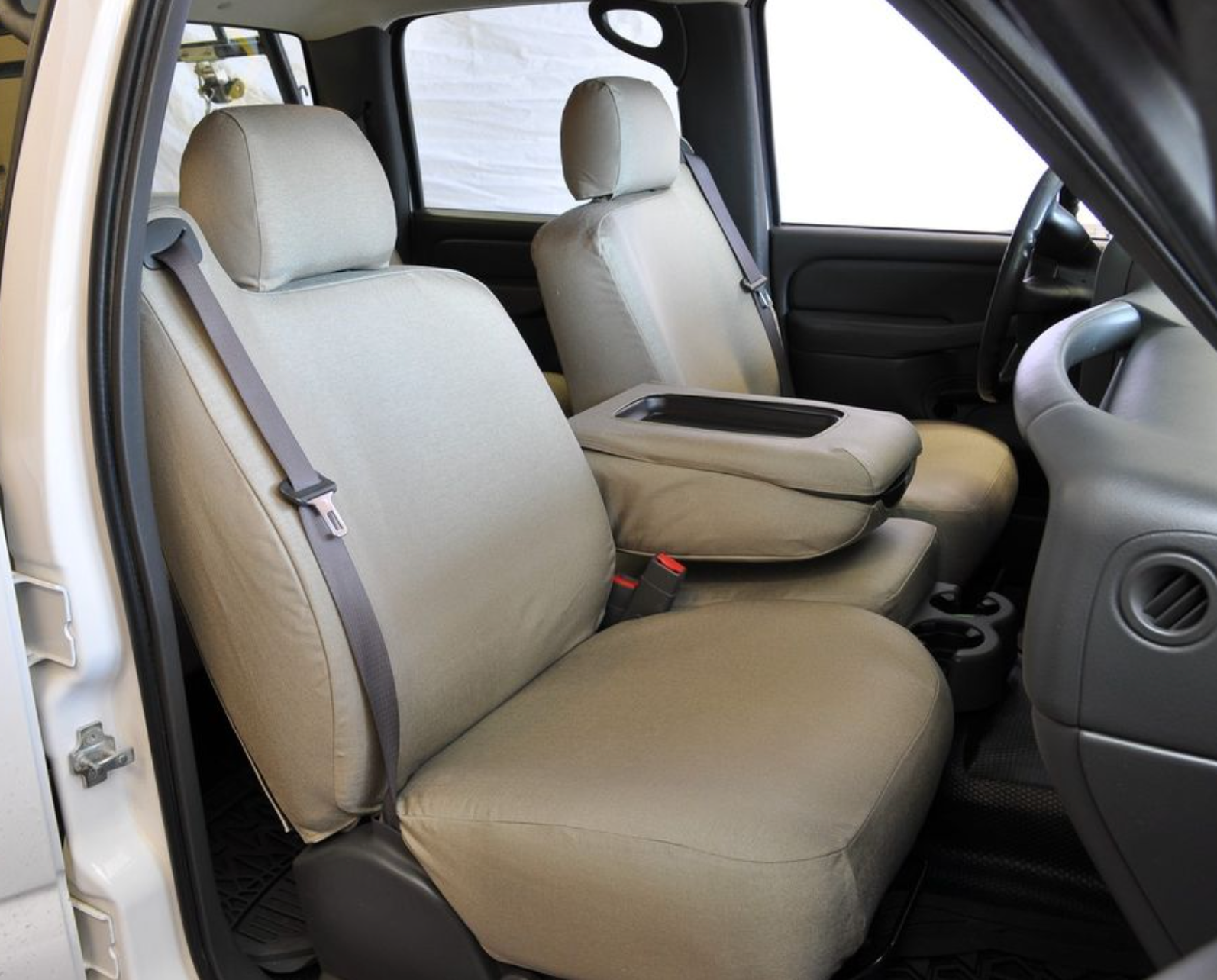
Marathon Seat Cover

We'll just come out and say it: Marathon used to make a darn good seat cover. But since Covercraft bought them out, the quality has gone downhill. We did a side-by-side comparison of old vs new Marathon seat covers so you can see what we're talking about.

Their covers are made from 1000-denier CORDURA® and we'll take a look at their Excel covers for pricing comparison.

Price: $350

Pros

✅ Lots of colors

✅ Made from CORDURA®

✅ Waterproof

✅ Airbag safe

✅ Many customizable options

Cons

❌ Not made in America

❌ Reports of poor quality since switching manufacturers

Verdict

If you can find old Marathon seats, buy them. They'll be a great investment in protecting your truck.

Read Marathon vs. TigerTough Seat Covers

Canvasback
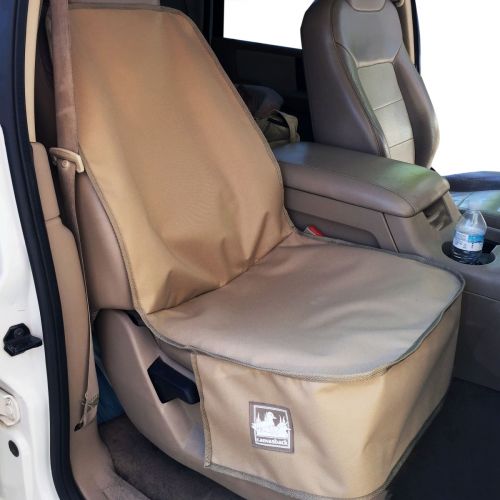
Canvasback Universal Fit seat covers. Source: Canvasback

We won’t lie; we hadn’t heard of this brand until Ambre Schaffer, Marketing Director at Aggtrans, pointed them out. These seat covers are a one-size-fits-most style, so consider that when ordering. You won’t be getting a custom fit for your seats.

Canvasback seems to be best known for their cargo liners. Liners are custom fit for your vehicle’s cargo space and attach with hook and loop.

Ambre confirms the durability and easy installation, “[the cargo liner] is custom fit to your specific vehicle and velcros right in place. They've been installed for three years without budging or showing any signs of wear. If I needed to remove them, they'd pull right up.

"In addition to carrying around all of my photography/videography gear and field gear for construction, I'm a search and rescue handler with a k9. We're usually covered in mud and debris.” 

With a review like that, we had to include this option.

Price: $150

Pros

Durable cargo liners customized to fit most vehicles. Despite not having custom-fit seat covers, the covers are at the bottom of our price range at $140 for a pair of bucket seat covers. On top of all this, Canvasback is woman-owned, and we think that’s pretty cool.

✅ Inexpensive

✅ Fits most vehicles

✅ Woman-owned company

Cons

❌ Not custom fit

❌ Limited six-month warranty

Verdict

We probably wouldn’t put these in a work truck to protect the seats, but we like the cargo liner options. If you’ve got a dog or use your cargo space a good deal, we’d suggest looking into Canvasback. Plus, we can’t help but love that they’re made in Minnesota.

ShearComfort CORDURA® 

ShearComfort CORDURA® seat covers in black and gra
ShearComfort CORDURA® seat covers. Source: ShearComfort

Like TigerTough, these covers are made from CORDURA®. It’s a slightly different kind, though. ShearComfort uses a heavy-duty 500 denier CORDURA® fabric, which isn’t as durable as the 1000 Denier CORDURA® we use. But this is still going to be a durable seat cover.

Price: $428

Pros

These airbag-safe seat covers are waterproof, durable, and guaranteed to fit perfectly. There’s a lot to love about them, and they’d perform well in a work truck.

✅ Waterproof

✅ Guaranteed perfect fit

✅ Airbag safe


Cons

❌ They don't use CORDURA® on their entire seat cover

❌ Price is a little high

❌ Limited Warranty

Verdict

They’re tough and built for hard work, but we don't love that ShearComfort doesn't use CORDURA® on the entire seat cover. They only use it on the portions you'd touch when sitting in the seat. The rest is made of a thin, stretchy material which will give out over time. They have great reviews from their customers. ShearComfort is a good option for your work truck, but not the best.

Read ShearComfort CORDURA® 1000 Denier Xtra-Duty vs. TigerTough Seat Covers

VERTEX OFF-ROAD

VERTEX OFF-ROAD is a newer company, started in 2021, and they specialize in truck seat covers. They consider themselves "American craftsman and enthusiasts committed to building top-quality products that help you upgrade and protect your truck for everywhere the road ahead takes you."

Well, what's not to love about that? Let's look at their 1000-Denier CORDURA® Canvas seat covers.

Price: $400

Pros

✅ Use CORDURA® nylon on their colvers

✅ Automatically include a center console cover

✅ Lifetime warranty, albeit limited

✅ Airbag safe


Cons

❌ Foam-backed seat covers (foam breaks down over time)

❌ Limited vehicle line

Verdict

We love that they're using CORDURA® nylon canvas for this particular cover. They also automatically include a center console cover and pockets for the seatbacks. They also have a lifetime warranty and seem pretty flexible, but it does exclude everyday wear and tear. 

This is the first time we've run across another brand that uses a string to cinch around the seat for a secure fit. It's just too bad they don't use StringLock.

This seems like a great cover. These are going to be a durable option for your truck. And given that they come with a center console cover and seatback pockets, the price is fair for what you get.

TigerTough

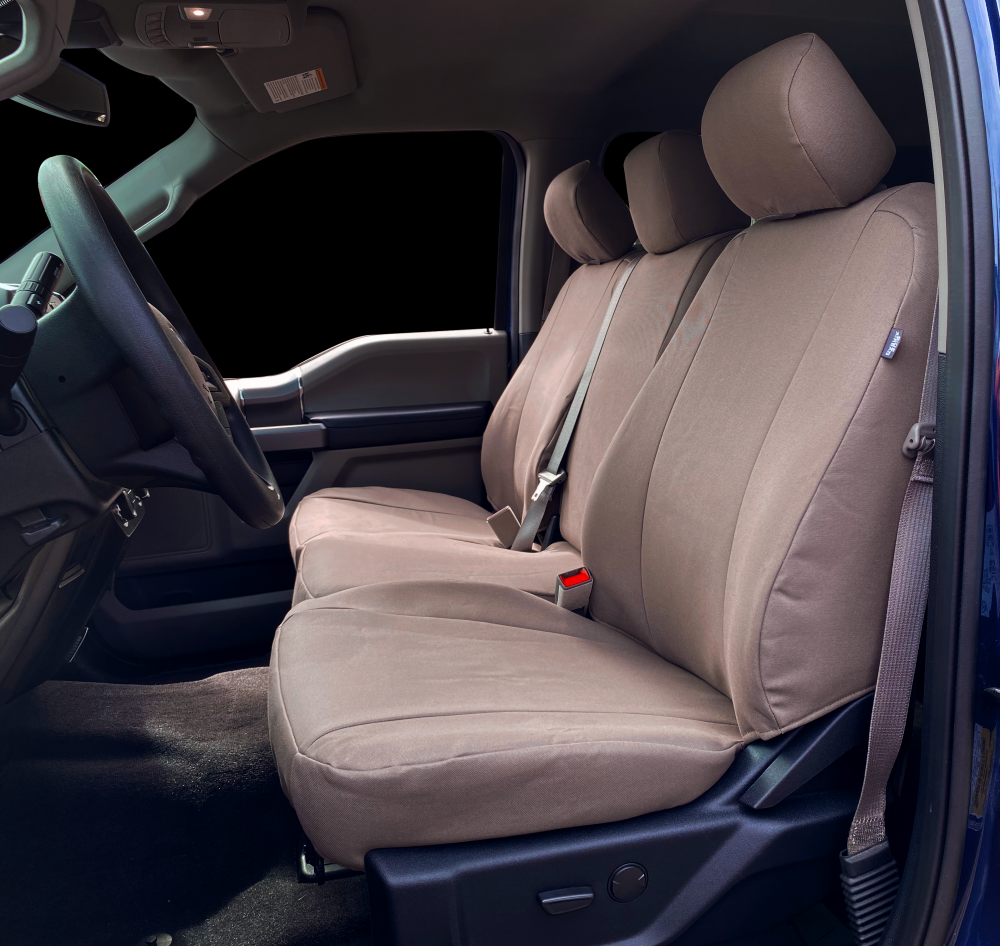
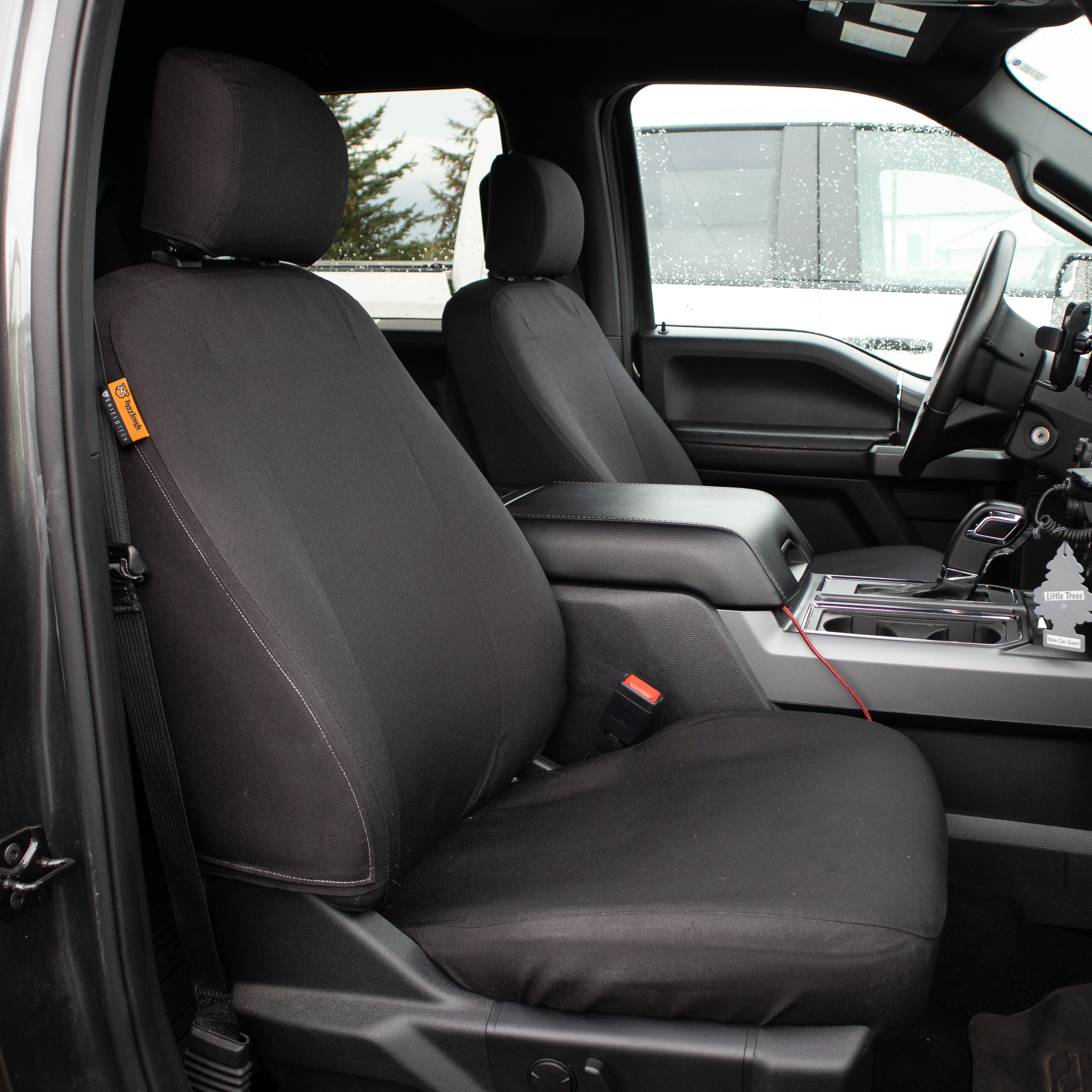
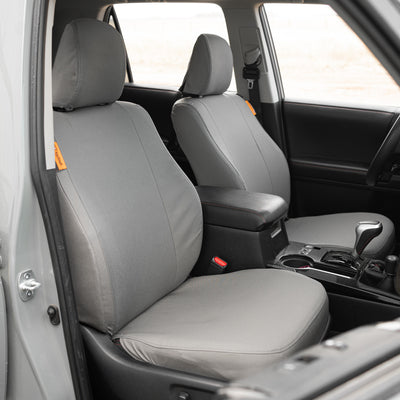
TigerTough seat covers in gray
TigerTough seat covers

TigerTough seat covers are designed for hardworking men and women. They’re extremely tough (hence the name).

We put our seat covers through torture tests. Do we do these tests for fun? Yes. Do we love proving how resilient these covers are with each test? Also yes. 

Need more proof that we believe in our products? We have an unconditional warranty for at least two years on our products. They’ll get gross, they’ll get stained, but they won’t fail you, and neither will we.

Price: $317

Pros

✅ Unconditional warranty

✅ Custom fit

✅ Two-week turnaround

✅ Waterproof

✅ Airbag safe

Cons

❌ Limited colors

Verdict 

These are some of the lowest-priced seat covers in this lineup, with an average 4.9 star rating from users. Everyone from parents to first responders uses TigerTough seat covers, and they’ve always risen to the occasion. 

Of course we love our own seat covers (or we wouldn’t work here). But that doesn’t mean they’re best for you and your work truck. Look at all the options and choose the covers that fit you best. 

Summary

Not all seat covers are created equally. Some will be better for you than others. We think you should have ones that:

  • Are waterproof
  • Easy to clean
  • Have a great warranty and return policy
  • Made in America

You don’t want to be stuck with seat covers that aren’t getting the job done. You want something that will last for years and ultimately save you money in the long run.

Look at the features of all these work truck seat covers and decide which one is best for you based on your needs and budget.

Covercraft Endura PrecisionFit Covercraft Carhartt SeatSavers Wet Okole Marathon Canvasback ShearComfort CORDURA® VERTEX OFF-ROAD TigerTough
Cost $334 $379 $402 $350 $150 $428 $400 $317
Star Rating 4.5 4.6 N/A 4.5 4.9 4.6 4.7 4.9
Warranty 3 year limited 3 year limited 90 days 4 year limited 6 months limited 2 years Lifetime Limited Unconditional 2 years
Material Canvas-nylon-polyester blend Duck Weave Cotton Neoprene CORDURA (unknown denier) 600 X 300 poly denier 500 Denier CORDURA® 1000 Denier CORDURA® nylon canvas  1000 Denier CORDURA®️
Fit Custom Custom Custom Custom Universal Fit Perfect Fit Perfect Fit Perfect Fit
Waterproof ☑️ ☑️ ☑️ ☑️ ☑️ ☑️
Airbag Safe ☑️ ☑️ ☑️ ☑️ ☑️ ☑️ ☑️ ☑️
Made in the USA USA and Mexico USA and Mexico ☑️ ☑️ ☑️ ☑️ ☑️ ☑️
Colors and Patterns 32 2 40+ 14 11 10 3 8
Seatback Pockets Yes Yes Optional Optional No Yes Yes Optional
All specs based on 2023 Ford F150 Regular Cab Bucket Seats

Update on 07/06/2023: We Initially had WeatherTech Seat Protectors as part of this list but removed them when we found out they weren't considered airbag-compatible in all vehicles. Take a look at WeatherTech Seat Protector Review for more information.
What is CORDURA Fabric?

CORDURA® sets the standard for fabric durability, known for its unmatched resilience against abrasions, tears, and scuffs. This robust woven fabric is made of nylon material and is favored for high-stakes applications from military gear to adventure equipment. 

It’s the Hercules of fabrics.

CORDURA® seat covers embody this strength, designed to withstand rigorous daily use, unforgiving weather, and incidental spills, ensuring your seats are well-protected for years.

The History of CORDURA®

CORDURA® fabric isn't just durable; it's a legacy in the making. Crafted over half a century ago and trademarked by DuPont, CORDURA® began its journey, toughening up tires and military attire. Fast forward to the 1970s: that’s when CORDURA® really showed its mettle, becoming the fabric of choice for military apparel because of its unparalleled resistance to wear and tear.

It didn’t stop there. CORDURA® broke through military confines, transforming the consumer market with its rugged essence, revolutionizing everything from outdoor equipment to durable luggage. Remember lugging around a Jansport or Eastpak backpack in the 80s or 90s? That was made out of CORDURA®.

Celebrated for its enduring nature and reliability, CORDURA® continues to evolve, meeting the challenges of a world that demands strength and longevity.

What Makes CORDURA® Unique?

When it comes to fabrics that need to endure, CORDURA® stands out from the crowd. But what exactly sets it apart? The answer lies in its composition and the varying deniers it offers.

What is CORDURA® Made Of?

At its core, CORDURA® is a type of nylon made by spinning together fibers of various lengths to create an exceptionally sturdy yarn. However, it's not just any nylon. CORDURA®'s fibers are specially engineered and treated in many steps that enhance their natural durability. The result is a fabric that boasts resistance to abrasions, tears, and scuffs far beyond that of ordinary nylon.

Understanding Denier

Denier refers to the weight of the yarn used in the fabric. Specifically, it indicates the weight in grams of a 9,000-meter length of the yarn. The higher the denier, the thicker, sturdier, and more durable the fabric. This makes the denier a crucial factor when selecting a fabric for specific applications — the right denier for the right job ensures both efficiency and longevity.

The Spectrum of CORDURA® Deniers

CORDURA®'s versatility is reflected in its range of deniers, each suited to different tasks:

  • Lightweight Applications (30 to 210 denier): Used for clothing and light bags where flexibility and breathability are needed alongside durability.
  • Intermediate Applications (500 denier): Strikes a balance between strength and weight, ideal for more demanding travel gear and backpacks.
  • Heavy-Duty Applications (1000 denier and above): The choice for situations where maximum durability is non-negotiable, such as in seat covers for heavy machinery, military gear, and workwear.

Focusing on 1000 Denier for Seat Covers

This high-denier powerhouse doesn't just cover your seats; it armors them. Choosing CORDURA® means choosing unbeatable resilience and a commitment to long-lasting protection, keeping your seats in top form against the toughest challenges.

Key Benefits of CORDURA® for Seat Covers

  1. Exceptional Abrasion Resistance: The tightly woven fabric of CORDURA® stands up to continuous rubbing and friction without showing signs of wear. This is particularly crucial for seat covers, which are subject to constant use and movement.
  2. Enhanced Longevity: CORDURA® is synonymous with longevity. Seat covers crafted from this material are less likely to need replacement, which means less waste and more savings over time.
  3. Adaptability: CORDURA®'s versatility allows it to be treated for additional properties, such as water resistance.

CORDURA® in the Real World

CORDURA®'s reputation for toughness is built on real-world grit—it's the fabric that's been put through its paces in the most grueling conditions imaginable. It's the go-to material for professionals who need performance they can count on, day in and day out, no matter the job site's demands.

CORDURA® Across Industries

Military: In the military, gear failure is not an option. CORDURA® is extensively used to create equipment that soldiers rely on, from bulletproof vests to heavy-duty rucksacks, due to its high tensile strength and exceptional durability.

Outdoor Gear: Adventure seekers and outdoor enthusiasts turn to CORDURA® for backpacks, camping gear, and apparel that can endure the elements and rugged terrain without faltering.

Workwear: The fabric's resistance to abrasions and tears makes it ideal for workwear in industries like construction and forestry, where clothing and gear face constant abuse.

Caring for Your CORDURA® Seat Covers

Like any other high-performance equipment, CORDURA® seat covers require proper maintenance to ensure they continue functioning at their best. However, taking care of them is not as daunting as one might think. Here are some straightforward tips and dispelled myths to help you maintain your CORDURA® seat covers effectively.

Maintenance Tips for Longevity

  • Simple soap and water are often enough to clean CORDURA® seat covers. For tougher stains, a soft brush and mild fabric cleaner will do the trick.
  • Steer clear of bleach and other abrasive cleaners, as they can degrade the fabric's protective coatings over time.

Choosing the Right CORDURA® Seat Covers for Your Vehicle

Selecting the perfect CORDURA® seat cover for your vehicle doesn't have to be a challenge. With the right information and key points in mind, you can make an informed choice that provides maximum protection and longevity.

  • Understanding the make, model, and year of your vehicle is crucial. CORDURA® seat covers come in designs tailored to specific vehicle layouts, ensuring every contour is covered.
  • Different deniers of CORDURA® cater to varying degrees of wear. Determine the conditions your vehicle's interior faces and choose a denier that stands up to those challenges.
  • Many vehicles have unique features, such as side airbags or integrated seatbelts. Ensure the CORDURA® seat covers you choose accommodate these specifications.
  • Full coverage is key. Opt for seat covers that cover the entire seat, reducing the risk of unprotected areas that can accumulate wear.
  • Look for additional protective features such as water resistance, UV protection, antimicrobial options, and reinforcement in high-stress areas.

Why does TigerTough use CORDURA®?

By now, you’ve seen how tough it is. We make seat covers for work trucks, semi-trucks, and heavy equipment, so our covers need to be able to stand up to the same harsh conditions as you do.

It’s also made in the U.S., like our seat covers, which is important to us as a company.

“1000 Denier is the perfect blend of strength and workability. It's tough enough to be almost indestructible, but it's still flexible enough to be easy to work with. Any heavier gets stiff, and any lighter loses strength. It's highly customizable. It can be dyed and printed with a range of colors, and we can add a ton of different technologies to it to make it waterproof, antimicrobial, etc.”

Sheldon Zitzmann, Marketing Director


Compare CORDURA vs. Carhartt

Curious to see how CORDURA® seat covers measure up to Carhartt? Take a look at the lab results, where a third-party laboratory independently tests each material. 

Read article

Durability Lab Results: Carhartt vs. TigerTough

Durability isn't just a nice-to-have in a seat cover; it's an essential. Whether you're in the construction business, managing a fleet of delivery vehicles, or just an everyday driver who values the longevity of your truck's interior, the quality of your seat cover material plays an important role in protection. But here's the deal: not all seat covers are created equal. 

So, how do you cut through the marketing jargon and truly measure the toughness of a seat cover?

Well, in our case, we shipped off two seat covers to an independent textile testing lab.

So here’s the in-depth, third-party laboratory comparison between TigerTough's 1000-Denier CORDURA®️ and Carhartt's renowned Cotton Duck. No biases—just raw data.

In this report, we'll lay out the results of tests conducted on these materials, shedding light on their abrasion resistance, puncture resistance, and tear resistance. 

If you don’t want to read this entire report, we’ll just tell you now that TigerTough surpasses Carhartt in all three categories. But if you want the details, by all means, keep reading.

Testing isn’t the most exciting thing, and we could get hyper-nerdy about this, but we hope that by the end, you'll have a clearer picture of which material stands tall when faced with the daily wear and tear of rugged use.

The Importance of Third-Party Testing

Here's why third-party testing is an indispensable part of the product development and marketing process:

  • Objective Assessment
  • Credibility Boost 
  • Consistent Standards
  • Unbiased Feedback
  • Leveling the Playing Field

We've already compared Carhartt vs. TigerTough side-by-side, but we wanted to see which one would be more durable. Since we don't have that kind of equipment, we worked with an independent lab.

The Lab of Choice: TexTest

TexTest stands as a pinnacle in fabric testing, with over 30 years of distinguished experience. Recognized for assisting brands in certifying product specifications, TexTest ensures compliance with government regulations and adherence to elite industry standards.

Their credibility is fortified by an ISO 9001 quality management system, guaranteeing consistent and accurate results. This rigorous standardization accelerates the market entry for businesses, relying on TexTest's dependable evaluations.

Furthermore, TexTest's comprehensive array of advanced lab equipment offers an expansive suite of testing services. Their commitment to innovation is evident through active memberships in ASTM, AATCC, AFMA, and IFAI, ensuring they remain at the vanguard of testing methodologies.

Not only are they ANAB accredited, but they're also an officially approved testing lab. That's the expertise and assurance needed for an independent testing facility.

Materials Under Test

The material used in seat covers is pivotal in determining longevity, durability, and overall performance. 

TigerTough 1000-Denier CORDURA®️ (Black)

Derived from a blend of nylon and other synthetic fibers, CORDURA®️ is renowned for its resilience and durability. The term "1000-Denier" refers to the fabric's density, with "denier" as a fiber thickness measurement unit. A higher denier indicates a thicker, more robust fabric.

Carhartt Cotton Duck (Brown)

"Duck" in fabric terminology refers to a heavy, plain-woven cotton fabric. The term "duck" comes from the Dutch word for cloth, "doek." Carhartt's variant, known for its ruggedness, is unapologetically sturdy and has been a staple in workwear for decades.

The Testing Parameters

When assessing the quality and durability of fabric materials, especially those designed for rugged use like seat covers, there are specific benchmarks and tests that experts rely on. These tests are designed to simulate the kind of wear and tear these materials might face in real-world conditions. For our evaluation of CORDURA®️ and Carhartt Cotton Duck, we focused on three main testing parameters:

  1. Wyzenbeek Abrasion Test (ASTM D4157): This test evaluates how well a fabric can resist wear from repeated rubbing. Think of it as simulating the repeated action of sliding in and out of a seat or the consistent contact of a seatbelt against the material.
  1. Puncture Resistance (ASTM D751 Flat Tip Probe): Here, we gauge how the material stands up against punctures from sharp objects. This is vital for those unexpected moments when a sharp tool or object ends up on the seat.
  1. Tear Resistance (Trapezoid Method ASTM D 4533): This test determines the material's ability to resist tearing, especially critical for situations where there's a strain on the fabric, such as when something gets caught on it.

But before we dive deeper into these tests, let's clarify two terms we'll reference quite a bit: 'warp' and 'filling.'

Warp Yarns: These yarns run lengthwise in a fabric parallel to the edge. They are typically more robust and tightly wound than filling yarns.

Filling Yarns (or Weft Yarns): These yarns run perpendicular to the warp, going across the width of the fabric. They interlace with the warp yarns to form the fabric's structure.

Understanding these terms isn't necessary, but these influence the fabric's strength and durability in different directions.

Wyzenbeek Abrasion Test (ASTM D4157)

In the fabric industry, one of the most trusted methods to measure a material's resistance to wear and tear is the Wyzenbeek Abrasion Test. 

The Wyzenbeek Test simulates the action of everyday wear and tear on fabrics. A piece of the fabric is stretched over a frame, and then a specific kind of abrasive, such as a wire screen or a standardized piece of cotton duck, is rubbed against it. The number of cycles, or double rubs, it takes for the fabric to show noticeable wear or breakdown provides a measurable and consistent standard of durability. The more cycles a fabric can withstand before showing wear, the more durable it is.

TigerTough Results

Warp: 1,700,000+ cycles before wear
Filling: 1,700,000+ cycles before wear

Carhartt Results

Warp: 1,670,000 cycles before wearing completely through
Filling: 1,670,000 cycles before wearing completely through

Comparative Analysis

While both materials showcased exceptional durability, the TigerTough 1000-Denier CORDURA®️ demonstrated a particularly impressive performance. Remarkably, it maxed out the test at 1,700,000 cycles in warp and filling directions. This means that the test's limit was reached, so we don't even know how much further TigerTough could have gone.

Carhartt Cotton Duck, on the other hand, exhibited strong durability, reaching 1,670,000 cycles in both testing directions. While commendable, the distinction is clear: TigerTough's CORDURA®️ not only surpassed Carhartt but showcased the potential for even greater resilience that couldn't be quantified in this test, suggesting it provides an even longer-lasting seat cover in real-world scenarios.

Wyzenbeek abrasion test results showing that TigerTough CORDURA is stronger.

Puncture Resistance (ASTM D751 Flat Tip Probe)

Puncture resistance is a crucial parameter when considering the strength and longevity of fabrics, especially in contexts where they may be exposed to sharp objects or sudden impacts. It's the measure of a fabric's ability to withstand penetration, a key determinant in its ability to protect underlying surfaces and, by extension, maintain its integrity over time. Whether it's for seat covers exposed to tools, equipment, or any accidental contact with sharp items, this test provides a snapshot of how well a fabric might hold up against potential damage.

Puncture resistance is necessary. A seat cover might look great and feel comfortable, but its utility is greatly diminished if it easily gives way to things like a screwdriver or dog claws.

TigerTough Results

The results varied depending on the direction of the probe, with scores of 120, 114, and 136, resulting in an average of 120 lbf.

Carhartt Results 

The Carhartt fabric tested at 48, 40, and 36 in different directions, averaging 41 lbf.

Comparative Analysis

TigerTough's 1000-Denier CORDURA®️ exhibited an outstanding performance in the puncture resistance test. On average, TigerTough was approximately 193% stronger than Carhartt. This substantial difference underscores TigerTough's enhanced ability to withstand punctures, providing superior seat protection. Carhartt's performance, while still commendable, was significantly outshined by TigerTough in this regard, highlighting the enhanced protective qualities the latter offers.

Tear Resistance (Trapezoid Method ASTM D 4533)

Tear resistance is one of the essential indicators of fabric durability, especially when subjected to rigorous use. Tear resistance gauges a fabric’s capacity to prevent a small rip or cut from becoming a gaping wound in your seat cover.

Significance in Industrial and Rugged Environments

In industrial or rugged environments, fabrics often encounter various stresses, from snagging on equipment to being caught between sharp or heavy objects. A seat cover's integrity isn't just about withstanding the initial damage but also ensuring that minor damage doesn't escalate into major, irreparable harm. A high tear resistance means that even if the fabric does get nicked or slightly cut, the damage is localized and doesn't spread, thereby maintaining the overall integrity of the seat cover.

TigerTough Results

Warp: The fabric exhibited a tear strength of 103 lbs.
Filling: Recorded a tear strength of 96 lbs.

Carhartt Results

Warp: Demonstrated a tear strength of 20 lbs.
Filling: Registered a tear strength of 20 lbs.

Comparative Analysis

The numbers speak for themselves. TigerTough's 1000-Denier CORDURA®️ exhibits remarkable tear resistance, significantly outperforming the Carhartt Cotton Duck. Depending on the direction of the tear, TigerTough's fabric is between 380% to 415% more resilient in tear strength than Carhartt's.

Summary of Results

Wyzenbeek Abrasion Test (ASTM D4157):

TigerTough: Reached over 1,700,000 cycles, which is the test's maximum limit, implying its true potential remains undetermined.

Carhartt: Scored 1,670,000 cycles.

Statistical Insight: Despite the numbers being close, it's important to highlight that TigerTough's fabric hit the test's ceiling, hinting at even greater durability. On the other hand, Carhartt's fabric, while commendable, did not max out the test. This can translate to noticeable differences in fabric longevity and wear in real-world scenarios.

Puncture Resistance (ASTM D751 Flat Tip Probe)

TigerTough: Registered a puncture strength of 120 lbf.

Carhartt: Recorded 41 lbf.

TigerTough's fabric showcased a puncture resistance 193% stronger than Carhartt's. This means a significantly better defense against accidental stabs from tools, sharp objects, excited dogs, or other potential hazards.

Tear Resistance (Trapezoid Method ASTM D 4533)

TigerTough: In the warp direction, the strength was 103 lbs, and 96 lbs in the filling direction.

Carhartt: Tear strengths stood at 20 lbs for warp and 20 lbs for filling.

Statistical Insight: TigerTough's fabric is between 380% to 415% stronger in terms of tear resistance than Carhartt's, depending on the tear direction. This difference can mean a minor fabric stretch and a full-blown tear for industries or scenarios with rugged use.

Overall Analytical Impression

All data shows that TigerTough's 1000-Denier CORDURA®️ as the superior fabric in every metric tested. 

Every percentage point of difference could signify additional weeks or even months of product life, fewer replacements, increased savings, and an overall enhanced user experience. In a world where durability and functionality are paramount, these test results offer clear guidance on which fabric stands out as the better choice.

Whether you choose TigerTough or another seat cover brand, we want you to be fully equipped with the information so that you can make the best investment for your vehicle.

Read article

Covercraft Carhartt vs. WeatherTech Seat Covers

Both brands have earned their stripes, commanding respect in the market for their quality and durability. But brand reputation is just one piece of the puzzle when hunting for the right seat cover.

Your vehicle’s interior faces daily challenges, from accidental spills to the wear and tear of regular use. And while both Carhartt and WeatherTech promise top-tier protection, the real question is: which one truly delivers on that promise? 

We've ordered both covers and tried them on a 2023 Ford F-150, and we’ll give you a head-to-head comparison to help you make an informed decision for your ride.

Installation

Installation might seem straightforward with seat covers, but it's more than just fitting a piece of fabric onto a seat. It's about ensuring the cover stays in place, doesn't interfere with the vehicle's functions, and looks aesthetically pleasing. Carhartt and WeatherTech have different installation methods, and we’ll take a detailed look into both processes.

Covercraft Carhartt Installation

You know Carhartt. Their seat covers promise the same rugged quality as their workwear. 

The aesthetic is instantly recognizable, appealing to fans of the Carhartt brand. However, a slight hiccup emerges in differentiating the driver's seat cover from the passenger's, especially since these covers are airbag-safe, making correct installation crucial.

Installation is straightforward, with simple instructions typical of most seat cover brands (but not typical of TigerTough…just sayin’). The covers are one piece, excluding the headrest, which means less hassle in assembling multiple parts. However, this singular design can be tricky in ensuring a snug fit, especially over prolonged use.

WeatherTech Installation

WeatherTech is no newbie in the vehicle protection arena. Installation of their Seat Protectors promises speed, with our trial run clocking it at under three minutes for a single cover. Their one-piece design is reminiscent of a bib, using two straps behind the seat, one beneath, and a stretchy band around the headrest posts for a relatively secure fit. Simplicity is WeatherTech's motto here.

However, this simplistic approach has its drawbacks. The one-piece design exposes the back of the seat (cue a hospital gown analogy). The lack of snug fit will also lead to the cover shifting with regular movement in and out of the vehicle.

Design and Fit

Design and fit aren't just about making your truck’s interior look good. It's about protection and durability. Covercraft Carhartt and WeatherTech each have strengths and potential areas of improvement.

Covercraft Carhartt

Carhartt's design leans heavily into its brand identity—rugged, durable, and ready for work. The SeatSaver Custom Seat Covers, made of their signature "heavy-duty, firm-hand Carhartt® Duck Weave fabric," are an extension of this brand. This 100% cotton fabric feels familiar to anyone who's donned a Carhartt jacket or hat.

However, this commitment to tradition can be a double-edged sword. The material does wear out (we’ve seen it). A seat cover sees far more friction than a jacket, so it won’t last as long.

Each Carhartt cover is customized to your vehicle's specific make and model, making it a custom fit.

The seat covers are constructed as a single piece (aside from the headrest) unlike TigerTough seat covers. While this can simplify the design, it can compromise the fit. Over time, as users slide in and out of their vehicles, the SeatSavers might shimmy and shift, detracting from the snug fit you’d hope for.

“Will not stay in place. Have to fix the cover every time I get out, very frustrating for the price.”

- Timothy C.


WeatherTech

WeatherTech's design philosophy seems centered around simplicity. Their Seat Protectors adopt a minimalist, one-piece design approach. 

However, the emphasis on simplicity also leads to compromises. The seat protectors only cover the front, exposing the back—a curious choice that might not appeal to those looking for full protection like a TigerTough seat cover. And the lack of a custom fit for specific vehicles means the covers won’t offer a snug, glove-like fit. This might lead to the seat covers shifting more than users like, especially with frequent use.

“Heavy duty, but not enough places to secure them so they don't slide up. Don't really fit right. Pretty expensive for the fit! As long I keep pulling them down the should protect from dirt etc.”

- Jericho


Headrest Protection

The headrest cover, while sometimes overlooked, plays a vital role. Protecting the headrest ensures not only the longevity of the material but also the cleanliness and appearance of your vehicle's interior. 

Covercraft Carhartt and WeatherTech take different approaches to headrest protection, and understanding these can greatly influence one's buying decision.

Covercraft Carhartt: Integrating the Iconic Fabric

Covercraft Carhartt headrest
Covercraft Carhartt SeatSavers headrest cover

Carhartt continues its commitment to its signature Duck Weave fabric, even regarding the headrest. The headrest portion is a separate piece (like TigerTough) and offers a consistent look throughout the seat. This ensures that the iconic rugged appearance is uniform, making the interior look cohesive.

Functionally, the headrest cover protects against dirt, wear, and the elements. However, as it's designed as a separate piece, there might be concerns regarding its fit and potential to shift over time, especially if not secured properly.

WeatherTech: The Minimalist Approach

Weathertech seat protector not covering the headrest
WeatherTech Seat Protectors don't cover the headrest.

WeatherTech's approach to the headrest is noticeably different. Their Seat Protectors do not cover the headrest, opting for a strap around the headrest bars. While this minimalist design ensures quick installation and removal, it leaves the headrest vulnerable to dirt, sweat, and other potential stains.

From an aesthetic standpoint, the lack of coverage can be seen as a design inconsistency, especially when the rest of the seat is protected. Functionally, for drivers in blue-collar jobs, the unprotected headrest might wear out or discolor faster than the rest of the seat.

Seat Back

Often, the back of the seat is a neglected aspect of protection. It’s not as visible as the seat front, but it's just as important when it comes to shielding against wear, tear, and potential damage. Let’s just say Carhartt and WeatherTech have different approaches to covering the seat back.

Covercraft Carhartt: Full Coverage with Character

Carhartt seat cover with Carhartt logo
Carhartt SeatSavers seat cover

Appearance

The Carhartt Duck Weave fabric extends to the back, ensuring a seamless look throughout the seat. Its rugged texture and signature style adds a touch of workmanship to the vehicle's interior, even in areas not immediately visible.

Fit

The Carhartt design snugly wraps around the seat back, with the material's firmness ensuring it stays in place. This tight fit minimizes the material's chances of sagging or becoming baggy.

Extra Features

  • Logo: Carhartt’s iconic patch sits between the shoulder blades, a subtle brand reminder.
  • Storage Pocket: A standard feature on their covers, the seat back pocket offers added functionality and storage, a win for those who like to keep things organized.
Seatback pocket on a Carhartt seat cover

WeatherTech: Simplified Protection

WeatherTech Seat Protector

Appearance

The Seat Protectors by WeatherTech sport a more minimalistic design. If you’re into bibs, you’ll be into these.

Fit

The design leaves the back exposed, resembling a shield rather than a full cover. This design choice might raise eyebrows among those who prefer complete coverage, but it allows quicker installation. But it also makes for a sloppy fit.

WeatherTech Seat Protectors leave the back of the seat exposed.

“When the dog is on the seat, the cover moves around every time she changes position. It should not be my job to re-engineer a WeatherTech product to make it work. I have always been pleased with WT products until now.”
- Doug S.


Extra Features:

  • Open Back: The lack of a full back cover is a drawback, but this can benefit those who need quick access to pockets or features on the original seat.
  • Optional Back Protector: For an additional $60, WeatherTech offers an additional seat back protector, acknowledging that a segment of their audience might prefer the extra layer of defense.

Seat Crease and Bottom

Let’s look closer at how Covercraft Carhartt and WeatherTech tackle the seat crease – that intersection where the seat bottom meets the back.

Covercraft Carhartt: Not the Neatest Crease

Seat Crease

Carhatt SeatSaver seat crease
Seat crease on the Carhartt SeatSaver
  • Carhartt’s one-piece design offers continuity at the crease. This translates to a smooth transition from the seat back to the bottom.
  • However, the single-piece construction means the crease may shift over time, especially as occupants slide in and out of the seat.

Seat Bottom

Carhartt SeatSaver seat bottom
The Carhartt SeatSavers allow access to all seat controls.
  • Crafted with their signature Duck Weave fabric, the Carhartt seat bottom boasts both durability and a rustic aesthetic.
  • The design ensures that access to seat controls remains unobstructed, with the cover contouring neatly around the edge of the seat.
  • Multiple contact points ensure the seat bottom remains anchored, resisting movement and providing a firm seating experience.

WeatherTech: One-Piece Flaws

Seat Crease

Seat crease on a WeatherTech Seat Protector
  • With WeatherTech’s single-piece Seat Protectors, the seat crease design emphasizes functionality. Its design can act as a catcher for crumbs and debris – a practical touch for those with kids or frequent eaters on the go.
  • But, much like Carhartt, this single-piece approach may lead to the cover shifting over time, compromising the initial neat appearance.

Seat Bottom

WeatherTech Seat Protector covering the seat controls on a Ford F-150
The WeatherTech Seat Protectors cover the seat controls
  • WeatherTech’s focus on functional design shines through with its skirt-like approach to the seat bottom, wrapping around its base.
  • This skirt design may drape over some seat controls, potentially causing slight accessibility issues for some vehicle models.
  • The absence of anchoring points under the seat means the seat cover might shift slightly during use, which may be a point of consideration for some users.

Airbag Compatibility

⚠️ Spoiler alert: Not all seat covers are airbag-compatible.

Covercraft Carhartt: Safety at Forefront

  • Carhartt's seat covers have been meticulously designed to work seamlessly with side seat airbags, ensuring unhindered deployment when needed.
  • Proper installation is paramount. Even with the best designs, incorrect fitting can pose risks. Adhering to the provided guidelines is crucial.

WeatherTech: A Questionable Oversight

WeatherTech Seat Protector with straps covering the side airbag
WeatherTech Seat Protectors cover the side airbag.
  • WeatherTech, despite its reputation in vehicle protection, has a glaring oversight in their Seat Protector design concerning side airbag safety.
  • Their installation instructions say not to put the covers on vehicles with side airbags. Since most new vehicles have these airbags, the WeatherTech Seat Protectors shouldn’t be installed.
  • Their securing straps can potentially cover side seat airbags, making them a hazardous choice for most modern vehicles, especially those post-2014 where side airbags are prevalent.
  • This design flaw isn't a tiny hiccup; it's a major safety concern. There’s no room for nonchalance when it comes to life-saving features.
Instructions from WeatherTech Seat Protectors
WeatherTech Seat Protector instructions

The Non-Negotiable Nature of Airbag Safety

The data doesn’t lie. The National Highway Traffic Safety Administration's findings underline the significance of side airbags in saving lives. So any seat cover that doesn't prioritize this essential safety feature should considered cautiously.

When choosing between brands, remember that safety isn't negotiable. Whether you lean toward Covercraft’s Carhartt or any other brand, ensuring the seat covers comply with the vehicle's safety features and are installed as directed is vital.

Price

Let's check out both brands' price points and analyze their value.

Covercraft Carhartt: A Premium Offering

Price Point

  • Priced at $428 (as of our last check for a 2023 Ford F150 model), Carhartt SeatSavers position themselves in the market's premium segment.

Value Proposition

  • The fabric's resilience, iconic Carhartt branding, and tailored fit justify the steeper price for many. As an integral safety feature, airbag compatibility adds to its value.
  • Their periodic sales and coupon codes offer some relief, making them more accessible during promotional periods.

WeatherTech: Surprisingly Steep for the Offering

Price Point

  • To cover the front and back of bucket seats (not the sides, as those are still exposed), WeatherTech Seat Protectors carry a price of $420. ($150 per seat protector and $60 for each seat back protector.) And your headrests are still naked in this scenario.

Value Proposition

  • At face value, WeatherTech demands a premium price. Given the safety concerns around airbag compatibility and the less-than-perfect fit, the value for the price could be better.
  • Their "universal" design philosophy might cut costs in production, but it might not always align with consumers' expectations for a tailored fit.

Price Overview

With Carhartt at $428 for a custom fit and WeatherTech at $410 for a universal fit, there's not enough cost savings for us to justify buying WeatherTech.

Customer Feedback and Reviews

Covercraft Carhartt seat covers earned a notable 4.5-star rating with over 2,000 reviews, showcasing their appeal and reliability. Many drivers admire the robustness and look of their signature Carhartt fabric.

On the other hand, WeatherTech's Seat Protectors aren’t as loved, averaging a 3.2-star rating. Customers often mention fit issues, coverage gaps, and concerns regarding airbag safety. While WeatherTech has mastered other vehicle protection, their seat protectors differ from their top-tier product.

Conclusion

Wrapping up our in-depth comparison of Covercraft Carhartt and WeatherTech seat protectors, here's a snapshot of what each brand brings to the table:

Covercraft Carhartt

  • Brand Legacy: Carhartt leverages its iconic Duck Weave fabric and its established reputation in durable workwear.
  • Design Philosophies: The seat covers offer a familiar feel, though there are areas, such as seat fit, where improvement is needed,
  • Price Point: Retailing at around $428 for their SeatSavers, Carhartt combines brand trust with a slightly premium price.

WeatherTech

  • Brand Strength: A well-established name in vehicle protection, WeatherTech is known for precision and craftsmanship.
  • Safety Concerns: The potential risk to airbag deployment is a major concern that users need to be wary of.
  • Design and Fit: Despite a more streamlined design, there are compromises, especially around seat crease and headrest protection.
  • Price Consideration: Priced at approximately $420 for complete front seat protection (including additional seat back protectors), WeatherTech's offering seems less compelling, especially when factoring in the safety reservations and lack of headrest cover.

No pressure, but when it comes to seat covers, your choices play an important role in determining your car's interior's safety, aesthetics, resale value, and durability. If you were to ask us, we’d choose Covercraft’s Carhartt over WeatherTech’s Seat Protector. When selecting seat covers, it's crucial to weigh aesthetics, comfort, safety, and functionality.

CoverCraft Carhartt SeatSavers WeatherTech Seat Protectors + Seat Back Protectors
Cost $428.00 $410.00
Star Rating 4.5 3.2
Warranty 3 year limited Limited Lifetime
Material Duck weave fabric Polycotton twill fabric
Fit Custom Semi-custom
Waterproof Water resistant Water resistant
Airbag Safe ☑️
Colors/Patterns 2 4
Made in the U.S. U.S. and Mexico ☑️
Seatback Pockets Yes
All specs based on a 2023 Ford F-150.
Read article

Meet the Mind Behind the Design: An Interview with Sheng Thao

At TigerTough, every stitch tells a story. Every curve of the seat cover traces the dedication and hard work of the hands that brought it to life. Sheng Thao is a talented individual who plays a crucial role in our design process. As our R&D Team Lead, she's been working her way through different roles, learning all about TigerTough's seat covers for the past five years. In a candid interview, Sheng offers a glimpse into her journey with us and her passion for design.

Growing with TigerTough

Sheng joined the TigerTough family in August of 2018. Beginning her journey as a sewing machine operator, she steadily climbed the ranks, immersing herself in roles from embroidery to fabric cutting. Each step of the way, she embraced new challenges, learning, growing, and eventually stepping into her role in Research and Development.

Her First Design

We make seat covers for work trucks and heavy equipment at TigerTough. Sheng drives a Subaru Forester–not exactly your typical work truck. Instead of buying a competitor’s seat covers, Sheng did what Sheng does best and designed seat covers for her Subaru. Because Sheng is a boss like that.

So you can thank Sheng if you’ve ever purchased Subaru covers from us because they wouldn’t be part of our inventory without her.

Sheng recalls her pride when she designed her first set of seat covers for her Subaru. "Driving my car around and letting people know I actually designed this seat cover in my workplace," she reminisces, "was one of the most memorable things about working here."

The TigerTough Culture

What makes Sheng stay with TigerTough? Beyond the design challenges and opportunities to grow, the camaraderie and team spirit stand out to her. "One of my favorite things about TigerTough is the people," she says. Together, the team collaborates, supporting each other, continually pushing boundaries, and ensuring that every product that rolls out is a testament to their collective dedication.
Every TigerTough seat cover carries the stories of the people behind them. With team members like Sheng, who bring their passion, expertise, and dedication to the table, it's no wonder our seat covers are more than just protective gear—they're a labor of love. As Sheng beautifully puts it, "At the end of the day, there's always something new to learn, something new to do." And it's this ever-evolving spirit of discovery and drive that makes TigerTough stand out.

A Career in Craftsmanship

If stories like Sheng's inspire you and have a passion for craftsmanship and innovation, we'd love to have you on the TigerTough team. We're always on the lookout for dedicated individuals who are eager to learn and grow. Check out our careers page and apply for a role that suits your skills and passion. 
Read article

How are TigerTough Seat Covers Made?

We’re proud that TigerTough seat covers are made in the USA. Since 2017, we’ve handled the process in-house and have streamlined how we do things to make the best seat covers on the market. We wanted to show you how this is done in our Minnesota factory and highlight the incredible team that makes each cover.
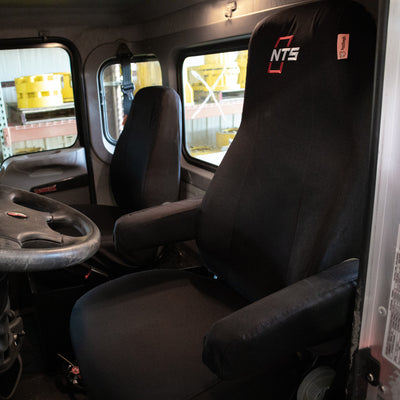
We hate to disappoint, but no little elves in our factory make these seat covers. Hard-working American men and women make each cover.

When we add seat covers to our inventory

Step 1: Measure

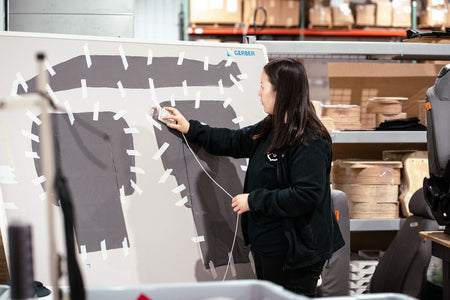
Woman creating a TigerTough seat cover prototype.

When we need to create a seat cover for a new vehicle or piece of heavy equipment, we need to bring that vehicle or seat into the shop. (It’s not always convenient squeezing a D7 Dozer in our space, so we just take the seats when it comes to heavy equipment.)

Each seat is measured and mapped by hand by our research and development team (R&D). We don’t work off of specs–we tried it once, and it wasn’t giving the custom fit we strive for. Nothing beats having the real thing in-house.

Step 2: Make a prototype

Hands cutting a material for a prototype seat cover.
Creating a prototype of a seat cover.

Once we have accurate measurements and maps of a seat, the team creates a draft–or a sample–of the seat cover, and we try it on the seat. 

At this point, we want to ensure it’s easy to install and has a good fit. Sometimes, you just get one or the other, so it’s an art to get a balance of fit and ease of installation. 

Typically, two or three drafts are created before we’re happy with the sample and consider it a worthy prototype. 

Step 3: Try it out

After a successful sample is made, we reinstall the seat back into the vehicle or piece of heavy equipment and make sure the cover is still easy to install. There might be a couple of tweaks to strap placement or the hook and loop, but these adjustments are relatively minor.

Step 4: Digitize the pattern

A woman digitizing a seat cover pattern so it can be put into the CAD system.
Digitizing a final pattern so that it can be reproduced.

Every seat cover is digitized in our CAD program once we’ve successfully made it. That way, we don’t have to remeasure a seat every time we get an order. Can you imagine the hassle that would be?

This entire process takes about one week for a truck with front and rear seats or three days for heavy equipment with a single seat.

Where do you source these trucks and heavy equipment?

Valid question! When a new model is rolled out of the factory, we know we will need to get our hands on one to create the new seat covers. So our truck models come from these sources:

For trucks

Local dealerships 

We have great relationships with some of our local dealerships. They’ll give us a vehicle to borrow for a week while we map, measure, and make seat covers for that model. 

OEMs 

Manufacturers (like Toyota) will lend us a vehicle when a new model comes out so that we can get seat covers added to our inventory.

Customers

Sometimes, a local customer has a vehicle we don’t have seat covers for. So they’ll bring their vehicle in to get measured. 

For heavy equipment

It’s less important for us to have the entire piece of equipment in-house than it is for us to have the seat when it comes to heavy equipment. So here’s how we do it:

Customers

In the off-season or when a piece of heavy equipment is being serviced, customers will send us the seats from the machines so we can map and make the cover for it. 

We buy it

Yep, sometimes we buy just the seats. This is one of the fastest and easiest ways to get our hands on a heavy equipment seat and map a seat cover for it. You should see the surplus of seats we have in the warehouse.

Every seat cover is made to order (unless we happen to have that one in our limited stock already). Thankfully, we’ve digitized the pattern for the seat cover in our CAD program, so we can turn to that when a new order is placed. 

Making seat covers when an order is placed

Man sitting at a C&C cutting machine

We’ve made hundreds of thousands of seat covers, but the process looks nearly identical for each one.

Step 1: The material gets cut

C&C machine cutting fabric
C&C machine cutting fabric to make a TigerTough seat cover for a customer.

We use a super cool C&C machine to cut the fabric. It compresses up to 20 sheets of material at a time and cuts them at once. 

Once upon a time, each piece was cut by hand, but the C&C machine is a lot faster, and it reduces the amount of error. The machine cuts an exact replica of the pattern every time. 

Step 2: It gets sewn

TigerTough cover being hand sewn by a woman with red hair
A person sews each TigerTough seat cover.

Every single seat cover is sewn by a human using an industrial sewing machine. There’s no machine that can sew a three-dimensional piece on its own–they just don’t exist. And that’s okay. We love knowing that someone right here in the U.S. is making seat covers for our customers. 

If a customer chooses to add a seatback pocket on their seat cover, that gets added when the cover is being sewn. 

Step 3: Inspection

Completed TigerTough seat covers that are folded and ready to be packaged
Freshly inspected seat covers that are ready to be packaged.

Every cover gets inspected up against the physical sample we made earlier. If a cover doesn’t pass inspection, it will either get fixed or scrapped. We don’t let anything leave our hands that we’re not proud of. And we never sell second-quality or imperfect inventory.

Step 4 (optional): Embroidery

Woman at an embroidery machine
Custom embroidery going on seat covers.

If a customer wants one or a thousand seat covers embroidered, that happens after the cover is sewn. Embroidery is one of the coolest things to watch. Each design has about 15,000-45,000 stitches, and each machine can do about 1000 stitches per minute. Each stitch is programmed for texture and color. Like we said, it’s a really cool process. 

The seat gets inspected again after embroidery.

Step 5: Package and ship it

TigerTough packages awaiting shipment.
Covers ready to be shipped.

When a cover is good to go, it gets packaged with instructions specific to that exact vehicle or piece of heavy equipment. So, if you ordered seat covers for a 2016 Ford F-150, you’ll receive instructions on how to install the covers in a 2016 Ford F-150. 

After packaging, the cover is sent off to its new home, which will protect a seat for the rest of its days. 

Read article

5 Signs You Need Seat Covers on Your Heavy Equipment

In heavy machinery, every detail matters. It's not just about the massive moving parts or the roaring engines; it's about those intricate touchpoints that enhance the operator's experience and boost the machine's lifespan.

Surprisingly, one of the most overlooked yet critical components is the seat. Think it doesn’t make much of a difference? Think again. Dive into these five tell-tale signs that might convince you to invest in seat covers for your heavy equipment—because sometimes, minor changes make the biggest impact.

1. Machines Have Lower Resale Value

When it’s time to part with that yellow iron, you want top dollar. We all do. So start with keeping that seat in tip-top shape. It's more than just a seat; it's your machine's first impression and can be super helpful for increasing your resale value

Visible Wear and Tear

Seats in heavy machinery aren’t just cushions but value indicators. When potential buyers see scuffed, torn, or worn-out seats, it instantly dings the perceived value of your equipment. It's as if those seat scars are tally marks, counting down the dollars from your machine's potential resale price. A roughed-up seat might imply otherwise, even if the machinery's guts work perfectly.

First Impressions Matter

Let’s keep it real, when folks first look at a piece of equipment. They're not digging into the engine first; they're checking out what's in plain sight. 

And where's the first place an operator is going to plant themselves? That's right, the seat. A well-maintained seat broadcasts care and diligence, suggesting that the rest of the machine has been treated equally. On the flip side, if that seat's seen better days, potential buyers might also assume the rest of the machine has.

Competing Equipment Looks Better

The heavy machinery market is like a bustling equipment beauty pageant, and let's just say machines with ragged interiors aren't winning any crowns. While your machinery might have the strength and power, it'll get left in the dust if it's not turning heads due to a worn-out interior, especially those seats. As buyers browse their options, they're naturally drawn to equipment that looks and feels good inside and out.

2. Operator Morale is Low

It's like lacing up worn-out work boots with holes in the soles for a double shift. You can still get the job done, but every step reminds you of the discomfort, and you can't help but wish for better. Like those boots, a busted excavator seat might not stop the work, but it sure makes the day feel much longer.

Morale isn't just about pep talks and pats on the back (although those are great). Sometimes, it's as simple as offering a clean, comfortable place to sit. Show your operators you value their hard work by valuing where they spend their working hours. 

Comfort Takes a Back Seat

Think about it — operators clock in hours, sometimes in grueling conditions, managing heavy machinery. Their seat is their throne, their cockpit, their control center. An uncovered, worn seat isn’t just uncomfortable; it's a daily grind on the backside and spirit. A lumpy, torn seat can make long shifts feel even longer. 

Pride in Equipment

The machine an operator uses is a reflection of them on the job site. No one wants to be the one navigating what looks like the "junker" of the fleet. Operators want to feel they're handling top-notch equipment, even if the machinery isn't new. When the machinery appears uncared for, especially right where they sit, it chips away at the pride they take in their work. 

3. Increased Machine Maintenance Costs

Regular Seat Repairs

It's like a broken record. The constant need to fix or replace uncovered seats becomes an ongoing chore. Each tear, split, or worn-out patch calls for attention, which means both downtime for the equipment and more money out of your pocket. The repetitive cycle not only takes a toll on your wallet but can be frustrating as heck for both you and the operators who have to wait around for repairs.

Imagine constantly slapping duct tape on a leaky pipe instead of just fixing it properly. That's what continual patch-up jobs feel like for machine seats. Sure, you're fixing the immediate problem, but it's a band-aid approach. Over time, those little fixes here and there stack up in costs. I

Investing in a solid solution—like a reliable seat cover—means breaking the cycle of "fix now, pay again later." Don't just put a lid on the issue; seal it shut for good.

Seat Replacement Costs

Replacing an excavator seat can cost anywhere from $550 to over $1000. That’s assuming you can install it in-house. Otherwise, it’s going to cost you more. Not to mention the downtime that the machine will experience.

Here are seat costs we’ve heard about from recent customers:

Cost Seat Type Comments
$625 Single Crane Seat They own 120 cranes and reupholster about ten seats every year.
$800 Air Ride They're charged $800 for ripped seats with their lease.
$800 Deere Loader This cost was just for the back and bottom cushions.
$1,000 Heavy Replaced only the seat.
$5,000 Excavator Last seat he replaced was $5000.
Costs customers have incurred due to bad seats.

4. Machines are Declining Quicker

When an operator settles into a heavy machine with a worn-out seat, it subtly communicates that the machinery isn't valued. Just as a cluttered car suggests carelessness, a tattered seat can lead operators to assume the management isn't invested in the machine's upkeep.

Perception and Care

If the visible, intimate space like the seat appears neglected, it can influence operators to adopt a cavalier attitude toward the entire machine. Just like a clean desk can inspire productivity, a pristine seat can signify the machine's overall importance, fostering more careful use.

Setting Standards

A maintained seat isn't merely about comfort but stands as a representation of the machinery's value. When treated as a prized asset, operators are more inclined to handle equipment respectfully, reinforcing that the machinery is an asset worth preserving.

The Broken Window Theory

Much like the idea that visible signs of disorder and neglect can lead to more harm, a disregarded seat can suggest that other parts of the machine might be equally neglected. When the operator's direct interaction with the machine (ahem, the seat) shows wear, it might promote a lax approach to broader machine care, accelerating overall deterioration.

5. Your Brand Image Kind of Sucks

Your brand is more than a logo or catchy slogan; it's the total experience you provide, right down to the nitty-gritty details of your machinery. Just as a polished storefront draws more customers, pristine equipment conveys professionalism, signaling to clients and competitors that you're all about quality, inside and out. 

Heck, forget about clients and competitors for a second and consider what your seats say about your brand to your employees.

The state of your machinery, obvious elements like seats, sends a clear message about your company's values. Neglected seats can suggest a broader disregard for quality and detail in your operations.

Seats are indeed just one piece of the branding picture, but it’s a trickle effect. If you take care of your seats, your operators will handle the machine. The machines will look and run better, and so on. 

So…Do You Need Seat Covers?

Your heavy equipment is more than just metal and gears; it's the lifeblood of your operations, a symbol of your brand, and a direct reflection of your commitment to quality. When the seats are frayed, stained, or downright busted, it doesn't just affect the machine — it ripples out, impacting resale values, operator morale, maintenance costs, equipment lifespan, and your brand's reputation. 

Read article

8 Tips for Increasing Resale Value When Selling Your Heavy Equipment

We all know the drill: you check the engine, kick the tires (best of luck if you’re doing this with tracks), and if the price sounds right, you seal the deal. 

But when it comes to offloading your heavy equipment, there's much more to consider than just finding the person with the deepest pockets. Just like restoring an old car or tuning up a beloved guitar, boosting the resale value of your machine should be a badge of honor. It's a craft, a passion that transforms the task into an art form. 

Let’s get into the details of increasing that resale value when it’s time to sell.

1. Regular maintenance is a no-brainer

Heavy equipment isn't just a chunk of metal; it's an investment and the backbone of your operations. Treating these machines like an afterthought? That's like ignoring the lifeline of your business.  

Let’s dive in to grasp why routine care is the secret sauce to keeping these beasts running at their best.

Changing the oil 

Heavy machinery, just like small cars, needs its oil–it’s the bloodline that keeps the engine purring and the gears shifting smoothly.

We're all about that resale value, right? A well-maintained engine, proven with consistent oil changes, boosts the confidence of potential buyers. They'll be more willing to fork over more dollars if they know you've treated your equipment like the precious gem it is.

So, next time you try kicking that oil change down the road, remember: this isn't just a chore left for Grandma and her trusty sedan. It's the heartbeat of your heavy equipment. Show it some love, keep it running like a champ, and watch as it rewards you in performance and value.

The power of a maintenance log 

You know those folks who always seem prepared, the ones who have every tool they might need and know every bolt of their machinery by heart? That's what a maintenance log does for your heavy equipment. This isn't about just scribbling down notes; it's laying down the history of your machine's health and performance.

Clear, honest records build trust. When folks see that log, they'll know you're straight-shooting and that machine has been cared for. Without a log? They might just see an old piece of gear. But with it, they'll recognize a battle-hardened buddy that's stood by your side.

Logs also help spot problems before they sneak up on you, preventing those nasty surprises. And here's the kicker: a solid maintenance log doesn't just keep your machine running; it boosts its value big time. So, remember: machines might be mute, but their logs speak volumes. Keep them detailed and show the world your dedication.

2. Keeping that paint job shiny and new:

A worn-out, rusty exterior can quickly create an image of negligence or poor maintenance habits—even if that's far from the truth. Think of it as having food in your teeth on a first date; it's distracting and might overshadow all the good stuff you bring.

In the world of heavy machinery, first impressions are crucial. A gleaming exterior says a lot about your equipment. It conveys professionalism, attention to detail, and pride in one's work.

Consider a protective coating

But keeping that paint job pristine isn't just about aesthetics. It’s also about protection. Protective coatings act like a shield, warding off threats like rust, corrosion, and the usual wear and tear from the elements. These coatings extend the life of the paint, ensuring that the vibrant colors and sheen remain intact for longer periods.

A few reasons to consider one:

  • Longevity: The longer your equipment looks new, the longer it can maintain a higher resale value.
  • Protection: It's not just about looks. Protective coatings can prevent minor damages from escalating into significant repair issues.
  • Cost-Effective: Investing in an excellent protective coating can save you from frequent repaint jobs, ultimately saving you money in the long run.
  • Enhanced Image: Let's face it, a machine that looks well-taken care of tends to command more respect and trust, both in its efficiency and in the crew that operates it.

While the inner workings of your machinery are vital, it's clear that the exterior should be noticed. Think of it as a two-fold strategy: It’s not just keeping your equipment looking dapper; it’s about ensuring longevity, preserving value, and exuding professionalism at every step.

3. Upgrade old parts

In a world that's constantly evolving with technology and innovation, staying up-to-date isn't just about keeping up with the Joneses; it's about ensuring that your heavy machinery functions optimally and remains relevant in the market. Here's why updating those aging parts is not just a smart choice but a necessary one.

Replacing worn-out components

Upgrading old, worn-out parts is more than just giving your machinery a facelift. Think safety and efficiency: newer components, built with the latest tech, can ramp up performance, from fuel economy to reduced maintenance. 

This isn't like holding onto a vintage baseball card; in the world of heavy machinery, top-notch performance, and reliability reign supreme. By swapping out the old with the new, you're extending the machine's working life and making it a hot ticket item for potential buyers. In a game where top-tier is the goal, you don’t want to be left behind because of outdated parts. Stay ahead, upgrade, and ensure your machine is always market-ready.

Document upgrades

Whenever you make upgrades, you’ll want to document that too. It offers potential buyers a clear roadmap of the machine's history and the enhancements made.

Since many upgraded parts come with warranties, documenting them ensures you can use these benefits if needed. Check to see if the warranty is transferable to any new owners.

Upgrading old parts is a strategic move that ensures safety, efficiency, and relevancy in an ever-evolving market. Paired with meticulous documentation, these upgrades can significantly elevate the machinery's value and appeal, making it a prime choice for potential buyers.

4. Record all repairs, part replacements, warranty info, and maintenance

We’ve said this a ton already, but that’s because it will be a huge selling factor for your heavy equipment. Trust is good, but the paperwork is proof. And our future buyer's peace of mind is worth can drive a sale.

In the world of heavy machinery, a well-documented record is almost as important as the machinery itself. Every repair, part replacement, and routine maintenance session talks about the machine's history and overall care. Think of it as a machine's health diary. 

And if you had a warranty on the equipment, call and see if it's still valid and transferable. If it is, make that info available to potential buyers.

This way, anyone looking to buy knows exactly what they're getting into — no tricks, no gimmicks. That trusty logbook proves you've taken good care of your equipment, and in the end, that's gonna put more dollars in your pocket when it's time to sell.

5. Put seat covers on your equipment ASAP

Okay, you knew we were going to throw this one in here. You probably saw it coming a mile away, but that doesn’t mean it isn’t true.

You wouldn't head out into a rainstorm without a proper jacket, right? The same principle applies to the seats of your heavy machinery. They face a daily storm of dirt, sweat, wear, and the occasional coffee spill. Protecting them isn't just about aesthetics (okay, but there’s some of that)—it's about smart, long-term investment. Heck, even if you don’t pick our seat covers, there are other options out there.

Let's go over why seat covers are the jacket your equipment needs.

1. The daily grind

Every day on the job site brings its own set of challenges. Whether hopping on and off the machine with dirt-caked work boots, the rough materials of utility belts, or the accidental drop of a heavy tool—your seat is right there in the line of fire. Without a protective barrier, even the sturdiest seats can start showing signs of wear and tear in no time.

2. Upholding the resale value

We all know that first impressions count. When you decide to sell your equipment, potential buyers will judge it based on appearance. A brand new seat speaks volumes about how the entire machine was treated. It suggests careful handling and regular maintenance. In a nutshell, a pristine seat can significantly boost resale value.

3. Maintenance costs

While the initial investment in a high-quality seat cover might seem like an extra expense, it can save you heaps in the long run. Reupholstering or replacing a seat can cost around $1,000. Preventative measures, like a durable seat cover, can steer you clear of these costs.

4. Comfort and morale

Let's not forget about the opeartor! A seat cover can add an extra layer of comfort. Over time, this can greatly affect the operator's overall job satisfaction. We're talking fewer aches and pains and a happier team member. Plus, when you get into the cab of an excavator and the seat is still in good condition, that just makes the whole experience better.

heavy equipment with a seat cover on and then off.

5. Easy cleaning

Mud, grease, or that sandwich that decided to explode? No worries! A good seat cover makes clean-up easier. Instead of a lengthy scrubbing session, you could look at a simple wipe-down.

6. Representing brand image

Your equipment isn't just a tool—it represents your brand, commitment to quality and professionalism. Protecting its seats showcases a level of meticulous care and attention to detail. It's a subtle message to clients, partners, and competitors that you're serious about your work.

"Bought this Seat cover for my New JD 50 excavator which was my first new machine, and wanted to protect it. I must say the seat cover is the best I have seen and used in any equipment I have operated. Best aftermarket purchase I have made for my machine."

- Bow


Seat covers might seem small, but they pack a punch in terms of benefits and cost a fraction of what a new seat would. They're the unsung heroes, taking on the daily challenges of the construction world to ensure your equipment remains in prime condition, inside and out.

6. Expert inspections are worth their weight in gold

While you might know your equipment like the back of your hand, prospective buyers or partners don't. They're about to make a significant investment and want to ensure they make the right choice. This is where the invaluable role of expert inspections comes into play.

Why getting a professional to give your equipment the green light increases buyer confidence:

  • Objective assessment: While you might offer the best descriptions and assurances, a third-party, especially an expert, brings an unbiased lens. Their evaluation is based purely on the equipment's condition and performance, free from emotional or investment bias.
  • Spotting hidden issues: Even with regular maintenance, there might be underlying issues that aren't immediately apparent. Professionals identify these problems, ensuring the equipment is in top shape or pointing out areas needing attention.
  • Boosted credibility: In the buyer's eyes, going the extra mile to get an expert evaluation showcases responsibility. It demonstrates that you're committed to transparency and ensures the equipment's quality.

The power of a stamp of approval:

  • Reinforcing claims: You can sing praises about your equipment all day, but an expert's confirmation is concrete evidence to back up those claims.
  • Increasing resale value: Expert-verified machinery often fetches a higher price in the market. The stamp of approval can sometimes make a tangible difference in the valuation.
  • Peace of mind for both parties: While you're confident in your equipment's condition, an expert's nod gives you and the buyer peace of mind. It reaffirms your beliefs and soothes any reservations the buyer might have.
  • Building trust: Being willing to bring in an expert to inspect the machinery shows prospective buyers that you have nothing to hide. It establishes a foundation of trust, which can be crucial in facilitating smoother transactions.

While there's an undeniable value in personal assurance and regular maintenance logs, an expert's stamp of approval can elevate your equipment's standing in the market. It's like having a trusted mechanic vouch for a used car—it just makes the whole deal sweeter for everyone involved.

7. Offer a training session with the sale:

You might draw the line here, but passing on heavy machinery is more than just tossing over some keys. Every machine's got its unique heartbeat, its quirks, and those "learned the hard way" lessons. 

You've put in the hours, learned its strengths, and discovered those sneaky little nuances that aren’t in any manual. Giving the new owner a crash course isn't just a nice gesture; it's about safety, efficiency, and a bit of that blue-collar camaraderie. It’s ensuring they get the job done right and safely while also passing on the know-how to keep that machinery running smoothly for the long haul. After all, the best lessons aren’t found in a book but from one hardworking hand to another.

8. Keep it clean

Machines are dirty. That’s why we love them. They tackle challenging terrains, bear massive weight, and endure the harsh realities of a construction site. However, it's essential to separate the workhorse from the mud it's trotted through when it's showtime. 

Here’s what a dirty machine can do:

  • First Impressions Matter: Just as we judge a book by its cover, the exterior cleanliness of a machine is often the first point of evaluation for potential buyers. A mud-caked dozer might hint at neglect, even if it runs perfectly.
  • Spotting Issues: Excessive dirt and grime can obscure actual problems or damages. Rust spots, leaks, or wear and tear might hide under layers of dirt. Presenting a clean machine ensures transparency and assures the buyer that there aren't underlying issues hiding.
  • Reflects Maintenance Habits: While dirt is okay after a day's work, a clean post-operation machine suggests meticulous care and routine maintenance. It gives a glimpse into the machine's overall treatment during its lifespan.

And here’s what a little cleaning can offer:

  • Boosts Aesthetic Appeal: Let's be honest; a sparkling machine just looks better. It's more inviting, appears newer, and exudes professionalism.
  • Highlights Quality: When a machine is clean, it's easier to showcase its features, the quality of its parts, and any upgrades or modifications. Essentially, cleaning lets the machinery's quality shine through.
  • Potential Buyers Appreciate the Effort: It might seem like a small gesture, but cleaning your equipment before a sale presentation sends a clear message: you value and respect the buyer's time and consideration. It shows that you're serious about the sale and have put in the effort to present the machine in its best light.

The construction site is a playground for these mechanical beasts, but when it’s time to sell, it's essential to scrub away the playground memories. Cleanliness, in this context, isn't just about aesthetics; it's a reflection of care, attention to detail, and professionalism. It solidifies trust, reaffirms value, and can significantly influence a potential buyer's decision.

It's about more than profit

When it comes to heavy equipment, resale value isn't just about counting pennies and dimes—it's a reflection of the blood, sweat, and respect you've poured into that machinery. 

By taking care of your gear, you're not just boosting its worth, but also passing on a legacy of dedication and hard work to the next proud owner. And hey, while you're thinking about giving your machine that extra TLC, why not start with the seat it rides on? After all, taking pride in your machine means making sure the next person in line feels the same way.

Read article