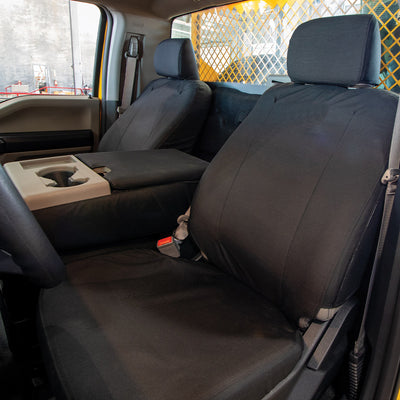
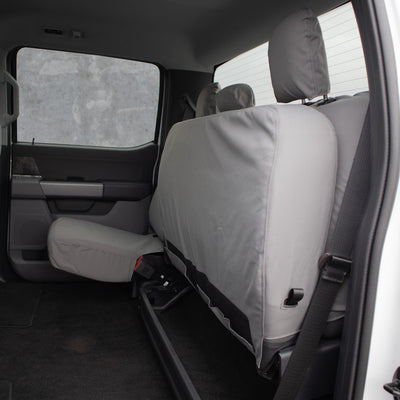
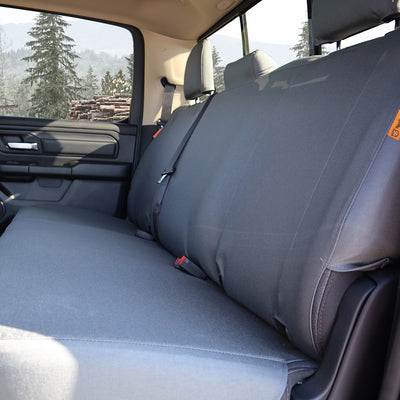
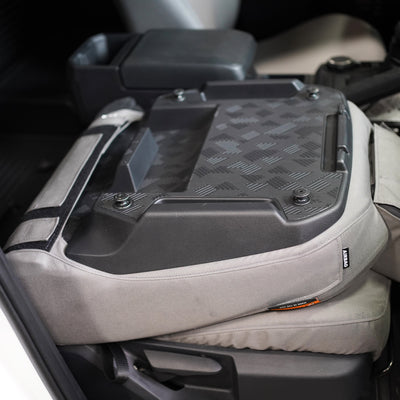
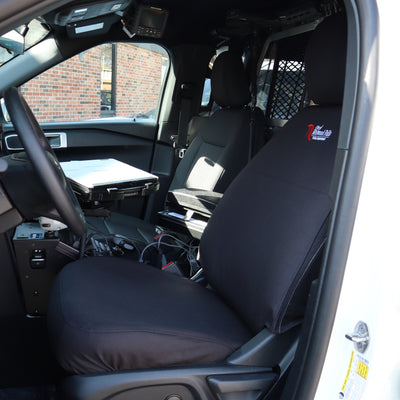
Learning Center

work trucks

Common Problems with Seat Covers (and how we solved them)

A lot of seat covers suck.


They fall short on fit, installation, warranty, and wear. We've reviewed some of the top seat cover brands on the market, and even some of those have struggles.


So here are eight roadblocks we hear when it comes to buying seat covers. We've addressed them to eliminate the suckage.


Problem 1: Seat Covers Suck to Install


First off, any seat cover that fits well will take a little time to install. If it just slips on, it will slip right off the first time you sit on it. 


TigerTough Solution:


We’ve worked our tails off to ensure that TigerTough seat covers don’t suck to install. It won’t be a breeze, but we'll make it as easy as possible.


  • Everything is held on the seat with hook and loop fasteners (you may call this VELCRO, but that's a brand name, and we aren't allowed to call it that) except a string that runs under the seat. That’s held together with our patented Stringlock. More on that later.
  • When designing a new seat cover, we also shoot a detailed install video and write up an install guide for that seat. We don’t do generic instructions because vehicles aren’t generic. 
  • TigerTough seat covers aren’t one-piece covers. The back, bottom, and headrest of your seat are all covered with separate covers, so you can work on one section at a time and end up with something that fits properly.
  • There’s a very fine line between seat covers that fit well and feeling like you’re putting five pounds of potatoes in a four-pound sack. We tip-toe right down that line. Johnny Cash would be proud.  


Problem 2: Seat Covers Never Stay In Place

We're with you. Seat covers that shimmy and shift are as bad as a bunched-up sock in your work boot. Ain't nobody got time (or tolerance) for that.


TigerTough Solution:


  • Everything is held on with hook and loop, string, and the Stringlock. None of these have any “give.” Your cover is secure once you’ve snugged everything up, pulled it tight, and slammed it into place. We don’t secure anything with elastic or adjustable clips because elastic stretches as soon as you put pressure on it, and adjustable clips tend to self-adjust over time.
  • This is another reason for the three-piece cover. When you can completely wrap the seat back, bottom, and headrest separately, the seat cover conforms to the seat's shape and has no room to move.
  • Everything is fully wrapped. Rather than run straps under the seat where you can’t see them, we run the cover all the way under the seat and connect it together in the back. Some seat covers are like aprons. Ours is like a pair of trusty coveralls. Which would you prefer on the job?
  • Stretchy fabric is notorious for moving around. Since TigerTough seat covers are made from tough, tightly woven fabric, there is no stretch at all.  


Problem 3: Seat Covers Never Fit Right

An ill-fitting seat cover doesn't do anyone any favors. And one-size-fits-most usually means one-size-fits-none. There's no reason to settle for a bad seat cover.

TigerTough Solution:


Every TigerTough seat cover is designed specifically for one seat style or one vehicle.


Here’s how the process works:


  1. We get the seat into our factory for the most accurate measurements.
  2. Our design team spends 2-3 days designing a cover that matches the seat exactly.
  3. We install the cover, taking detailed install photos and videos so you can see precisely how it goes when installing it.


If you’re hesitant to use seat covers based on past experiences with covers that fit like socks on a rooster, you have every right to be!  


No seat cover we make is designed from pictures or manufacturer specs. It’s all done the hard way, by hand, using the seats they'll cover.


Problem 4: They’re Unsafe


Okay, some seat covers aren't safe. Or hey, maybe safety never even crossed your mind. We actually reviewed a very popular seat cover brand that isn't considered safe when it comes to airbag deployment. You might also be think it's not safe to use them with heated seats.


TigerTough Solution:


Any TigerTough seat cover designed for seats with airbags built into them is designed to tear open exactly as the factory seat does if the airbag deploys.


A third-party lab independently tests our designs to ensure they work just as they should.


As for the whole heated seat thing, most covers are safe for heated seats. There will be some that perform better than others though.

Problem 5: They’re Ugly


Well, this is pretty subjective. Beauty is in the eye of the beholder, right?


Seat covers have come a long way, though, and you can likely find a cover in a style that suits you. Whether you want something tough, floral, camo, or fluffy. Heck, even Carhartt has covers.


TigerTough Solution:


We design for performance first, not looks. You won’t find bright colors, elaborate patterns, or luxury quilting on any of our seat covers. 


The fanciest we get is camo covers and custom embroidery.


We skip the decorative stitching so the covers are as tough as possible and look a little plainer than the factory seats.


If you want something that looks like a custom interior, you may not love our covers. If you’re looking for something that’ll keep your seats in good shape for as long as you own the truck, you’ll think they’re perfect.


Problem 6: They Wear Out


Remember the cheap parts store ones that we talked about? Those do wear out. We've even seen Carhartt wear out.


If you’re going to spend good money on seat covers to keep your seats looking good, you’re kinda getting the short straw if they’re made from cheap, stretchy fabric that wears out in a few months. Leave that material for yoga pants, not your truck.


TigerTough Solution:


You can be confident that your TigerTough covers aren’t going to give up on you. Since they’re designed for work, they’re made from military-grade fabric. The solid colors are made from the strongest fabric, a 1000-denier CORDURA, and the camos are made from almost-as-tough 900-denier polyester.


They’ve got a two-year unconditional warranty and we really mean unconditional.  If anything wears out or breaks for any reason, we’ll fix or replace it. (But we want to hear how it happened because we know there's a good story behind it.)


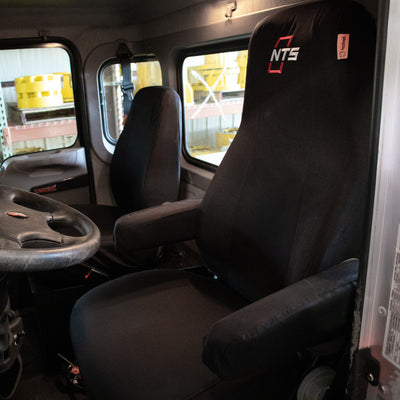
Here’s how a set looks after eight years and 235,000+ miles in a heavy equipment service truck:    


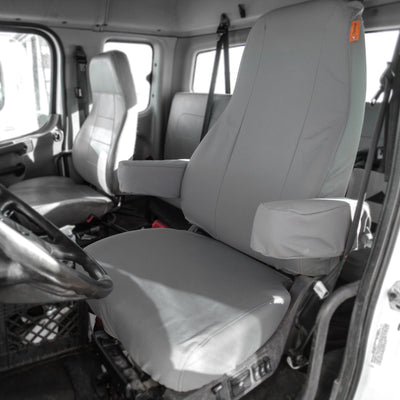
Used TigerTough seat covers in a truck.
TigerTough seat covers in a truck after eight years of heavy-duty use.


Problem 7: They’re Sweaty


You had pleather seat covers once, didn’t you? Or did you buy some cheap vinyl ones once that gave you flashbacks of your days on a school bus?


Gross. We don't blame you for wanting to steer clear.


TigerTough Solution:


Both of our fabrics are breathable so you won’t have to deal with swamp@** or peeling any bare skin off your seats. These won’t feel any different than your factory seat as far as being breathable or making you sweaty.


When spending hard-earned cash on your truck, ensure you get breathable seat covers.

Problem 8: They're expensive

No one wants to spend extra money on their vehicle. But seat covers aren't a frivolous expense, they're actually an investment. Don't roll your eyes —we'll show you the numbers.

Expense Cost
Average cost to repair or replace a seat $632
Resale value lost due to worn seats $1528-$1752
Possible lease chargebacks from damaged seats $1000-$1200
Detailing seats $279


A pair of TigerTough seat covers costs $317 with our standard fabric. By using seat covers as a preventative maintenance tool, you're get your initial investment back...and then some. 

See how we came up with these numbers.

Problem 9: They don't work with my heated or cooled seats

Not all seat covers get along with heated or cooled seats. If you're planning to fire up the heat or blast the AC in your seats, steer clear of pleather or neoprene covers (unless the manufacturer confirms they won't compromise your temperature controls).

TigerTough Solution:

While our covers aren't specifically designed for temperature-controlled seats, they're safe to use with heated seats. And sure, you can use them with air-conditioned seats, but don’t expect to feel that cool breeze with the same gusto on your backside like you would on a bare seat. We’re all about protecting your seats, so that's where we put our focus.

Problem 10: You're Not Sure What to Get


This is tough. First, we recommended finding the best brand for what you need. 


TigerTough Solution:


We’ve designed the lookup on our website to make it easy to find the covers for your vehicle. All you need to know are the following details.


  • The year (2020)
  • The Make (Ford)
  • The Model (F150)
  • The Trim Package (XLT)
  • The Cab Type (SuperCrew)

Once you punch in all that info, we’ll show you only the seat covers that will fit your truck!  If there could be a couple of different seat configurations in your vehicle, we’ll show you the different options and explain the differences between the two.


Find the best seat covers for your truck


If you're still not sold on seat covers, that's okay. But here's our list of things you should consider when shopping around:


  • Multiple-piece covers
  • Waterproof
  • Custom-fit
  • Made in the U.S.A.
  • Airbag-compatible
  • A strong warranty

Seat covers are an investment, and you want to be sure you're making the smartest choice for your needs.


Read article

Can you put seat covers on heated seats?

Yes, you can put seat covers on heated seats, but with caution. You need to choose the right type of seat cover that allows heat to pass through without causing damage to both the seat and the cover.

Heated seats in your truck are nearly a must-have in chilly weather (just ask us; we’re from Minnesota). Some of our customers ask us: is it safe to put seat covers on heated seats? 

Let’s clear the air and get down to the facts about protecting your heated seats without losing their warming benefits.
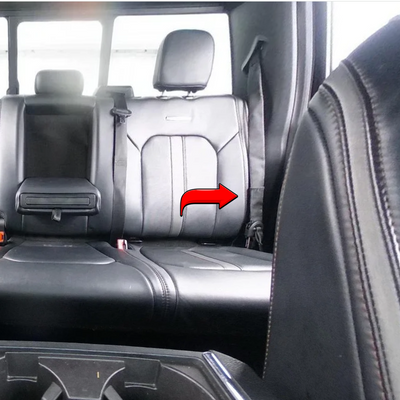
What kind of material is safe on heated seats?

Thin, breathable materials like polyester, CORDURA®, or certain blends are typically safe as they allow efficient heat transfer. Avoid materials that are too thick, foam-backed, or insulated, as they can block the heat and potentially cause damage to the heating elements. We’d also suggest avoiding faux leather or anything furry…for more reason than one.
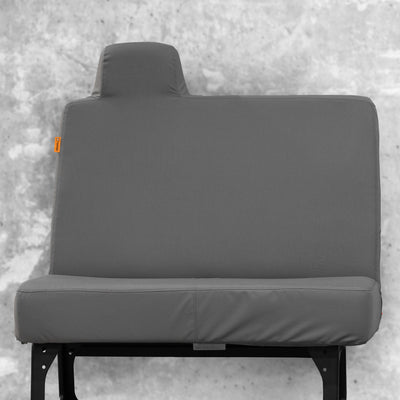
Are seat covers safe with aftermarket seat heaters?. 

Generally, seat covers are compatible with both factory-installed and aftermarket heating systems. However, aftermarket heaters can add extra bulk to your seats. Properly install heaters so that they're smooth under the covers. You can enjoy the added warmth and protect your seats with the right approach, but if your seat heaters are too bulky under the covers, you may want to consider a thinner option.

Safety and efficiency

When using seat covers on heated seats, consider the following:

  • Ensure the seat cover is properly fitted and doesn’t bunch up, as uneven distribution can lead to overheating in certain spots.
  • Be aware that seat covers may slightly reduce the heat intensity you feel.
  • Regularly check the seat covers and seats for any signs of heat damage.

How do TigerTough seat covers work with heated and cooled seats?

They work great, if we do say so ourselves.

“The covers work great with heated seats. They'll warm up just like the factory seats, and you won't notice a difference. If you use them with cooled seats, they'll work, but you'll notice less of a breeze. That's because the factory-cooled seats are perforated, but the covers are not. The covers will still cool and let some air through because the fabric is breathable, but it'll just be less than you're used to with the factory seats.” 

-Sheldon Zitzmann, Marketing Director 

Ready?

Planning to outfit your heated seats with covers? No problem, but let's do it right. Choose materials that play nice with the heat, and you're all set. It's about striking that perfect balance – enjoying the cozy warmth while keeping your seats rugged and ready. Go the right route, and your heated seats stay snug and secure, season after season.


Read article

Airbag-compatible seat covers: Are they safe?

To be direct, yes, airbag-compatible seat covers are considered safe if they allow the airbag to deploy in third-party testing.

But for those who want to know more details, this article is for you.

Airbags are relatively new in automobile history. They were heavily considered for passenger vehicles in the 1950s, according to The Rough Road to Airbags. The concept was brought to Chrystler, but they weren't interested. Ford and General Motors experimented with prototypes but couldn't mass-produce them. 

However, they didn't become common until decades later. NHTSA now estimates that frontal airbags have saved more than 70,000 lives in the U.S. through 2019, and they reduce driver fatalities in frontal crashes by 29% and front-seat passenger fatalities by 32%

So what are airbag-compatible seat covers, and why are they important?

What are airbag-compatible seat covers?

Seat covers are considered compatible with airbags when holes or flaps allow the seat airbag to deploy. They're considered safe for installation.

TigerTough seat cover showing the airbag compatible tag
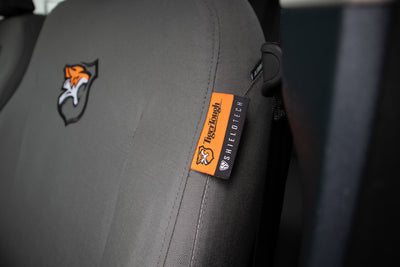
TigerTough seat cover with airbag-compatible tag

When you install seat covers on a newer (2012+) vehicle, you're almost guaranteed to cover up an airbag in the side of your seat. If your seat cover doesn't allow the airbag to deploy, you will likely be smashing your head and upper body into the side of the vehicle in the event of a crash. That's not something fun to think about, but it's true.

Watch this video and see how the torso airbag in the seat works with the ceiling airbag to protect the driver from hitting the side of the vehicle:

That doesn't mean you shouldn't install seat covers on your vehicle. Just don't install cheap, universal-fit covers. But watch out; even well-known manufacturers don't always have airbag-safe covers.

WeatherTech Seat Cover warning
WeatherTech Seat Cover instructions and warnings

If the seat cover doesn't mention anything about compatibility, and you see straps or anything covering the side airbag, it's probably best not to install it in your car, truck, van, or SUV.


A seat cover with straps covering the side airbag.
A seat cover that's not compatible with airbags.

Which brands of seat covers are compatible with airbags?

In our research, we've found the following top brands to be considered safe:

  • Covercraft
  • Wet Okole
  • Canvasback
  • ShearComfort
  • TigerTough

We haven't looked to see if these brands (other than TigerTough) have been independently tested, but according to their websites, they're considered safe with airbags. We suggest you only install seat covers that are independently tested and verified for airbag compatibility by a qualified third-party laboratory.

So TigerTough seat covers are airbag-safe?

Yes.

TigerTough seat covers have been independently tested and verified by MGA Research Corporation in Troy, MI. Watch the airbag deploy in under 30 milliseconds in the testing video below:

Whether you're installing truck seat covers or installing them on your car or van, check that the cover will allow your airbag to deploy. You owe it to yourself and your passengers.

Why are they important?

When adding aftermarket parts to your vehicle, you need to make sure you're not hindering any of the safety features of your truck, van, car, police vehicle, etc.

All vehicles today have airbags in the steering wheel and passenger side dash. Most vehicles come with them in the side of the seat back. Some cars have airbags in the A-pillar (by the dash), the B-pillar (by your head when you're in the seat), the ceiling, and other locations in the vehicle.

We HIGHLY recommend checking your owner's manual before modifying your vehicle's interior to ensure you aren't compromising your and your passengers' safety. And when you're ready to install seat covers, be sure they're compatible with your airbags.


Read article

Covercraft Carhartt vs. TigerTough Seat Covers

There’s a lot of competition when it comes to seat covers. You’ll undoubtedly see the Carhartt SeatSaver Custom Seat Cover when you google best seat covers for my truck.

Everyone loves Carhartt. You’ve got the hat, the jacket, and maybe the coveralls, so it’s natural to want to deck your truck out with it too. You’ve relied on Carhartt on the job, but can you rely on it in your vehicle?

And how do these covers compare to TigerTough seat covers? 

We’ll take an unbiased approach (no…seriously, we will) in comparing these two seat covers.

Covercraft Carhartt vs. TigerTough–who’s going to take home the gold? We’re about to find out. 

Watch the video comparison:

Packaging

We love the box the Carhartt covers arrived in. It was straightforward, said what it was, and branded so that you knew what to expect. The only thing we didn’t love was that it wasn’t clear which cover went on the driver’s seat. Since these are airbag-safe, putting the correct cover on the seat is important. 


Tigertough packaging in a bag and Carhartt seat covers in a box.
TigerTough seat covers come in a branded bag, and Carhartt seat covers come in a branded, shelf-ready box.

The Covercraft instructions are pretty simple and what you expect from a standard seat cover company. It’s a universal one-sheeter designed to work for any vehicle.

TigerTough covers come in a branded bag. If you’re ordering a lot of covers (like a fleet), you’ll get a box filled with these bags. Not as shelf-ready as Carhartt, we admit.

Unlike Carhartt, we send a detailed full-color instruction packet with our covers and a link to an install video for your specific vehicle. It might not be necessary for everyone, but we try to avoid troubleshooting by offering as much detail upfront.

Materials: What are they made of?

Carhartt SeatSaver Custom Seat Covers are made of “heavy-duty, firm-hand Carhartt® Duck Weave fabric and triple-stitched main seams.” This is the same 100% cotton fabric you know from your favorite Carhartt gear. You can feel it already, can’t you? Like their apparel, the seat covers are water-resistant but not waterproof.

TigerTough seat covers are made from 1000 Denier CORDURA®️. That’s a mouthful, so what does it mean? It’s made in the U.S., waterproof, nearly indestructible, and so tough that it meets Military Specifications. It’s designed and tested to withstand some of the most brutal conditions.

Carhartt Duck Weave is tough but won’t withstand the same abuse as 1000 Denier CORDURA®️—seats in a vehicle experience more friction than an article of clothing. So if your truck’s interior will be used well, you’ll want to consider your options carefully.

Well-worn Carhartt seat cover on a work truck driver's seat.
Customer photo of Carhartt seat covers (not sold by Covercraft), made with the Carhartt® Duck Weave fabric showing visible wear on the driver's seat.

Derrick had some great things to say about the durability of his TigerTough seat covers:

“These are great quality, tough, very good fitting seat covers. I have had similar covers in the past on a previous Tundra, and they lasted 16 years until I sold that truck. I expect the same from these.”

Design and Fit

The fit of the Carhartt Seat Savers is the number one complaint we hear about them. These covers are made in a single piece (plus the headrest), so you won’t get a secure fit. Covercraft's Carhartt Precision Fit comes in separate pieces and fits more like TigerTough seat covers, but they flaunt a price tag over $400, so we didn't use them for this comparison.

The SeatSavers look alright at first but shimmy and shift as you slide in and out of your vehicle.

TigerTough seat covers come in multiple pieces: the seat bottom, back, and headrest cover. You’ll get an accurate fit, no matter your vehicle.

More pieces = better fit

Just take a look at a recently installed Carhartt seat cover vs. a TigerTough seat cover that's been installed for eight years. The seat portion on the Carhartt cover is already shifting:

New Carhartt SeatSavers. Customer photo courtesy of the Covercraft website.
TigerTough seat covers after eight years of use. 

Headrest

Both headrest covers protect well. We’re happy that Carhartt covers them (because we’ve run into some covers that don’t). If you’re in any type of blue-collar line of work, chances are, you’ll want a cover protecting your headrest.

Just below the headrest, around the headrest supports, there’s a difference.

Close up photos of headrests on a TigerTough and Carhartt seat cover.
TigerTough covers are designed to fit under the plastic headrest mounts. Carhartt has a visible bias tape around their mounts.

The Carhartt covers have a visible bias tape around the edge. TigerTough covers are designed to fit under the plastic mounts of the headrest supports for a cleaner look. If you have the headrest all the way down, you wouldn’t notice. None of this affects function; it’s just a difference in design.

Seat back

TigerTough custom embroidery on a seat cover and a Carhartt logo on the Carhartt seat cover.
TigerTough seatback embroidery is an additional fee, whereas Carhartt's logo comes standard on their covers.

Covercraft’s option has the Carhartt patch in the area between your shoulder blades. TigerTough arrives bare. If you’d like, you can add embroidery, whether stock or custom, for an additional fee. As far as we can tell, you can't add custom embroidery with Covercraft.

As you move down the seat back, both covers fit well, but TigerTough fits more securely. We make our covers in multiple pieces, so there are additional points for the cover to stay secured to the seat.

Back of a TigerTough seat cover with an added pocket, and a Carhartt seat cover with a standard seatback pocket.
TigerTough's seatback pocket is an add-on for an additional fee. Carhartt's seatback pocket comes standard.

On the actual back of the seat, Covercraft gets points for having a pocket come standard on their vehicle seat covers. This is an upgrade feature for TigerTough and will cost you extra.

Seat crease

OK, this is where the difference is most obvious. It all comes back to one-piece vs. two, and the two-piece options just look neater. 

The crease of a seat with a TigerTough cover and a Carhartt cover.
TigerTough's seat cover comes in multiple pieces with a separate seat bottom and seat back. Carhartt's seat cover has one piece for the seat back and bottom.

Even if you shoved your hands into the crevice to get a neat look on the Carhartt cover, it would shift as soon as you slid into the vehicle. WeatherTech's seat covers are the same way. It makes for an imperfect fit, but you judge which look you prefer.

Seat bottom

These are pretty comparable. Both covers allow access to the seat controls and tuck in nicely on the side.

Sides of seat bottoms. One with a TigerTough seat cover and one with a Carhartt seat cover.
Both seat covers allow access to the seat control panels.

We wish there were additional contact points on the Carhartt seat bottom, but overall, it works.

Ease of Installation

Installation on the Carhartt covers was about seven minutes. Since their cover is one piece, it made things simpler. There are little pillows that you shove into the seat crease for the covers to stay in place. 

TigerTough took about nine minutes. That extra piece adds some complications to the installation process.

💡Helpful tip: When we installed the Carhartt seat covers, we couldn't find any indication of which cover went on which seat. In order for these to be airbag-compatible, they need to be on the correct seat. Take a look at the inside of the seat cover for a tearaway seam. That seam should be on the side of the seat closest to the door.

Warranty

Covercraft offers a three-year limited warranty on these particular seat covers. 

“Covercraft’s warranty coverage protects against defects in material and workmanship, as well as the fabric becoming unserviceable during normal use. After factory inspection, at its option, Covercraft will repair or replace the unit or specific panels or parts judged to be unusable. Warranty does not cover fading, which occurs naturally on all products used outdoors, or weather resistance of fabric.”

This is pretty good, but in the end, Covercraft can determine what they’ll cover and what they won’t. 

Our warranty is shorter at just two years, but we believe in the durability of our products, so we’ve made it an unconditional warranty. It doesn’t matter how your seat covers got wrecked (but we bet there’s an epic story there); we’ll repair or replace them for you.

Three-year limited vs. two-year unconditional warranty. 

Price

We want to compare apples to apples here, so we used a 2023 Ford F150 as our test model for pricing.

Covercraft Carhartt SeatSavers: $279 (this base price seems to fluctuate with their sales)
TigerTough Seat Covers: $327

The Covercraft covers cost about $50 less than the TigerTough option, and we can't gloss over that.

Customer Reviews

With a 4.5-star rating and over 2,000 reviews when this was published, there’s no denying that people love their Carhartt seat covers. A lot of the reviews echo the same, but we liked how specific Matthew H. got:

“Exactly what I expected. Had put these in my landscape work truck three years ago and have been pleased. When I got a new-to-me CR-V, twelve years old but very clean, there was no question I wanted to invest in seat covers to keep the nearly new interior in good condition. Good fit, decent attachment, and I expect no durability issues.”

TigerTough covers don’t have as many reviews, but we average a 4.9-star rating, which is pretty great! We love what John T. has to say about his TigerTough seat covers:

“As advertised. I tried to jam a screwdriver through them with acceptable (non-extreme) pressure. They held up just fine. I’m sure the friction from my backside over the years getting in and out of the truck (2009 F150) will never wear these covers out. Wish I had bought a set when the truck was new. Would have saved the original seats from wear and increased the resale value. Pursuing ordering a set for my 2019 F250 to just prevent excessive wear.”

Summary

Seat covers are a small investment that can save you thousands of dollars, so you want to choose the right kind. 

We often say that the Carhartt covers are the second-best covers for work trucks. If TigerTough doesn’t have a cover available for your vehicle, definitely go get your Carhartt fix. And if you love the Carhartt brand but want your seat covers to fit like a glove, you might want to consider upgrading to Covercraft’s PrecisionFit Carhartt Seat Covers, with two pieces (plus the headrest); they're designed to fit better.

When it comes down to the facts (and not our paychecks), TigerTough is more durable, has a more forgiving warranty, but they'll cost you a little more.


Covercraft Carhartt SeatSavers TigerTough
Cost $270 $327
Stars 4.5 4.9
Warranty 3 years (limited) 2 years (unconditional)
Material Duck weave fabric 1000 Denier CORDURA®️
Fit Custom Perfect Fit
Waterproof Water-resistant Waterproof
Colors/Patterns 2 8
Airbag Safe ☑️ ☑️
Made in the USA USA and Mexico ☑️
Seatback Pockets Yes Optional
Installation Time 7 minutes 9 minutes
Pricing based on a 2023 Ford F150.
Read article

How to Install TigerTough Seat Covers and What to Expect

Each TigerTough custom seat cover is shipped with step-by-step color instructions on installing them on the exact vehicle they were specifically designed for. 


So if you ordered seat covers for your 2022 Toyota Tacoma, you’ll get instructions on how to install those covers in a 2022 Toyota Tacoma. Pretty nice, right?


There are covers in the seat cover world that look awful because the installation process is confusing or inadequate. It’s a common problem with seat covers. We addressed this head-on by making installation as straightforward as possible.


And if you toss your instructions aside in a moment of confidence and need a few pointers along the way, you’re in luck, because we record installation videos for every vehicle. 


Since each vehicle is different, each seat cover install will be different. 


We’ll walk you through what a typical installation looks like.


Watch the video version


Before you start 


  1. Lift and remove the headrest.
  2. Lean the seat back.
  3. Remove any straps on the underside that hold the carpet up.
  4. If you have a Ford, unclip the plastic connectors under the seat–they might feel like they’re going to break, but they will come off.


Installing the seat bottom cover


  1. Make sure you start with the correct seat cover–passenger and driver’s seats are different, so just look for the tag.
  2. Line the seams up.
  3. Push the top flap of the seat cover between the seat back and the seat bottom.
  4. Take the strings and put one between the seat and the center console and cover and one between the seat cushion and plastic on the door side. These need to go down and under the seat, not straight back and behind the seat.
  5. Tuck the cover between the cushion and the plastic trim around the seat.
  6. Go behind the seat and find the strings you ran through the sides of the seat.
  7. Run them under the seat. Look at your specific instructions to see if you need to run them behind or in front of the seat mounts. 
  8. Pull them as tight as you can.
  9. Find the StringLock.
  10. Run the strings through each side of the StringLock as tight as possible and clamp it (the tighter, the better!).
  11. Run the front seat flaps over any seat-adjusting bar and under the seat.
  12. Pull tight on the front and back flaps and fasten them underneath the seat.


Installing the seatback cover


  1. Make sure the airbag tag is on the door side of the seat.
  2. Slide the cover over the seat.
  3. Press the cover down around the plastic headrest mounts.
  4. Go to the back and tuck the carpet flap up into the seat cover.
  5. Push the front flaps through the seat crease and fasten them on the backside.


Lastly, install the headrest cover


  1. Put the headrest back in, but don’t put it all the way down.
  2. Take the cover and make sure the long flap is in front.
  3. Tuck the flap to the back and secure it.
  4. You can put the headrest down now if you’d like.


How easy was it?


We’ve installed other seat covers (check out this Carhartt install we did) and must admit that ours take longer. Since our covers come in multiple pieces, you’ll get a better fit, but it will take a little while to get those pieces where you want.


We say to expect to spend up to 45 minutes per seat on installation. 


According to Hunt Tested:


“If you’re looking for a seat cover that you can throw on for the weekends and then take off during the week, this cover is likely not the best choice. While you certainly can remove and reinstall these covers, the process is involved enough that I wouldn’t want to do it frequently. To get a precision fit, you give up being able to quickly and easily take the covers on and off.”


Wrapping it up (see what we did there?)


These aren’t the easiest to install, but they’re also not rocket science. If you’ve ever stepped foot on a job site, you can install these. And we can assure you that every installation step helps give you the best-looking fit on your new seat covers. 


Every vehicle installation is going to vary a bit. But we won’t leave you in the dark. You’ll get detailed instructions, an install video, and you’re always welcome to contact us if you’re stumped. And if you want to skip the installation altogether, check out one of our 850+ dealers.


Read article

Will seat covers ruin leather seats?

Considering seat covers for your vehicle's leather seats? It's a decision many drivers think about. Leather is a premium material that demands thoughtful care, and the pressing question is whether seat covers help or harm leather seats.

For the most part, no, seat covers won't ruin your leather seats.

They're generally seen as a protective layer, guarding against daily wear and tear, spills, and sun damage. However, not every seat cover is suitable for leather. Some may negatively impact the material over time, like the ones that can trap moisture and adhere to the leather.

Understanding Leather Seats and Seat Covers

While those leather seats are pretty sturdy on their own, they can absolutely benefit from the extra protection that seat covers bring. It's all about keeping them in prime condition for as long as possible, and that's a job seat covers do pretty well, if we say so ourselves.

Leather seats are tough yet tender

Leather's durable, but it's not invincible. Constant sun exposure, the daily in-and-out, and the occasional coffee spill can leave leather looking worn and faded. Leather is also porous, so it absorbs spills, odors, and oils over time and needs some regular care to stay in tip-top shape.

Seat covers are your leather seat’s BFF

Think of seat covers as a shield for your leather: they keep the bad stuff (UV rays, spills, dirt, grease, pet hair) off your seats while still allowing the leather to breathe. The right seat cover protects your leather from the everyday abuse that ages it fastest, helping you preserve both the look and the resale value of your vehicle.

Do Seat Covers Protect Leather?

Yes, the right ones do. Seat covers are one of the best ways to protect leather seats. Here's what they guard against:

  • UV damage: Prolonged sun exposure causes leather to dry out, crack, and fade. A quality seat cover blocks UV rays entirely.

  • Spills and stains: Leather is porous and difficult to deep-clean. A seat cover takes the hit so your leather doesn't have to.

  • Wear and friction: Daily in-and-out causes surface abrasion over time. Seat covers absorb that friction instead.

  • Pet scratches: Claws and nails can quickly scratch or puncture leather. A tough fabric cover is a much cheaper fix than reupholstering.

You need to choose a cover that doesn't trap moisture, doesn't chemically react with your leather's finish, and fits well enough that it doesn't shift and create friction underneath.

How to Protect Leather Car Seats

Here are the best practices to maintain your leather seats:

  1. Clean your seats before installing covers. Dirt or moisture trapped under a seat cover can cause mold, mildew, and accelerated wear. Give your leather a thorough clean and let it dry completely first.

  2. Choose breathable materials. Seat covers made from breathable fabrics (like high-quality canvas or CORDURA) allow air circulation so moisture doesn't get trapped against the leather.

  3. Avoid foam-backed covers on freshly conditioned leather. If your leather was recently conditioned, wait a few days before installing foam-backed seat covers. The conditioner and foam can react in ways that damage both the cover and the leather's surface finish.

  4. Ensure a proper fit. A loose seat cover shifts around and creates friction which is exactly what you're trying to avoid. Choose covers designed for your specific make and model.

What are the best seat cover materials for leather seats?

The best overall choice for leather seats is heavy-duty canvas or woven fabric. Tough woven fabrics like TigerTough's seat covers are breathable, durable, and won't chemically react with leather. They sit against the seat without trapping heat or moisture, and they're machine washable, which makes them easy to maintain. If you're using your vehicle for work or hauling gear regularly, this is the go-to.

Our favorite seat cover brands for leather seats are:

  • TigerTough (obviously)

  • Carhartt

  • Marathon

  • Northwest

Materials to avoid on leather seats

These are our opinions, backed by a few facts. We absolutely suggest doing your own research to determine what you’re comfortable with. 

Neoprene Seat Covers

A solid option for active or outdoor use. Neoprene is waterproof and easy to wipe down, which makes it popular for off-roaders and water sports enthusiasts. The tradeoff: Neoprene is less breathable than woven fabric, so it can trap more heat in hot climates. It's generally safe for leather as long as it's installed on clean, dry seats, but if you’re not one to baby your truck or your seats, maybe avoid neoprene.

Faux leather or leatherette seat covers

A lot of people like the way these look, and they’re easy to wipe clean, but they're not the best choice for protecting genuine leather underneath. Leatherette doesn't breathe, so over time it can trap heat and humidity against your leather seats. Better for aesthetic upgrades on cloth seats than for protecting premium leather.

Cheap Foam-Backed Covers

Low-cost foam-backed covers are the most likely to cause problems on leather. The foam backing can interact with leather conditioners and UV-protectant treatments, potentially degrading both materials. If you're going foam-backed, make sure your leather hasn't been recently treated.

Seat Covers on Heated Leather Seats

One of the most common questions we get with leather seats: can you put seat covers on heated leather seats?

Yes, in most cases, seat covers are safe to use with heated leather seats. Here's what to keep in mind:

  • Check the seat cover material. Thinner, more breathable fabrics transfer heat more efficiently. Very thick or insulating materials may reduce how well you feel the heat, but they won't damage the heating element.

  • Never use seat covers that aren't designed for heated seats on seats you regularly heat. The repeated heat cycles can cause ill-fitting covers to shift, bunch, or wear unevenly.

  • Avoid covers with metal hardware near the seat surface. Metal components like rivets can become uncomfortably hot and potentially scratch leather when the seat heats up.

We put various materials to the test in the dead of winter to see which ones worked best with heated seats. Check out the test results.

Frequently Asked Questions

Will seat covers damage leather seats?

No. Quality seat covers protect leather seats rather than damaging them. The risk comes from using the wrong type of cover (like foam-backed covers on freshly conditioned leather) or installing them over dirty, damp seats.

Do seat covers protect leather from cracking?

Yes. UV exposure is one of the leading causes of leather cracking and fading. A seat cover blocks sunlight entirely, dramatically slowing the aging process.

Can you put seat covers on leather heated seats?

Yes, seat covers are generally safe for heated leather seats. Choose breathable, properly fitting covers and avoid thick insulating materials that block heat transfer.

What type of seat covers are best for leather seats?

Breathable, woven fabric seat covers are the best choice for leather. They protect against spills, UV, and wear without trapping moisture or heat against the leather surface.

Protect your leather seats

Seat covers and leather seats are a great combination, as long as you choose the right cover. Look for breathability, a proper fit, and clean installation. Skip the cheap foam-backed options, and you'll find that seat covers are one of the best investments you can make in protecting your leather's long-term condition and your vehicle's resale value.

Ready to protect your leather seats? 

Read article

Does CORDURA® tear?

With extreme force, it can. But it doesn’t tear in everyday scenarios. We challenged grown men to try and tear it with all their might, and take a look at their best efforts: 


Fleet managers will ask how our seat covers compare to Carhartt®, so in order to get an unbiased answer, we sent a sample of the 1000-denier CORDURA® fabric we use in our seat covers, along with the cotton duck Carhartt® uses for its seat covers, to TexTest for independent lab testing.

Using the ASTM D4533 Trapezoid Method, TexTest tested the tear resistance of both materials. A cut was made into both samples, and a force was applied to further tear them apart. CORDURA® tore at 100lb of force. The cotton duck tore at 20lb of force, making the CORDURA® 5x stronger than the duck cotton.

Check out the live test:

This isn’t about us comparing ourselves to Carhartt®, per se, but it’s one of the biggest brands out there and known for its durability. So we’re here to tell you that while Carhartt’s material is durable, CORDURA® is rated military-grade and labeled nearly indestructible. 

So yes, while CORDURA® can technically rip, we don’t think it will even rip on you in your daily use, which is why we offer an unconditional warranty on our seat covers. They fail you? We’ll make it right.

Read article